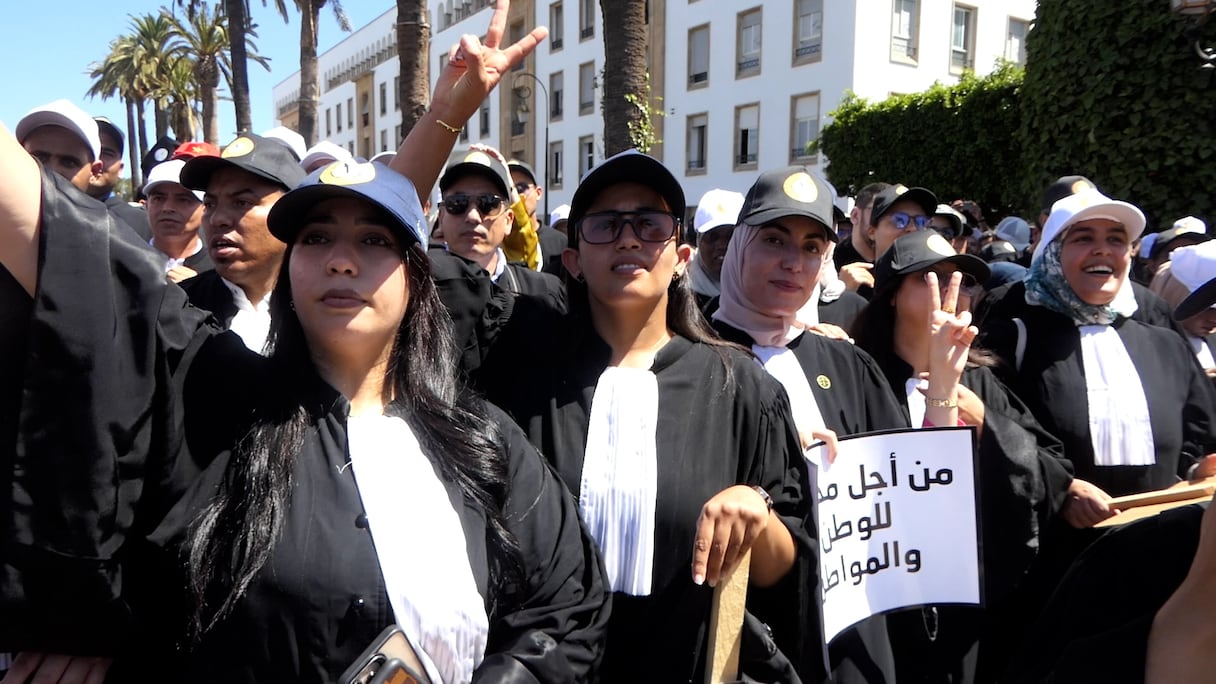
The decision was announced after a meeting of the association’s executive bureau in Rabat, where representatives agreed to continue the nationwide protest movement.
The strike will continue to cover all legal services, including legal aid, which is primarily intended to assist vulnerable and low-income groups.
Read also : Morocco: Lawyers’ law left in legal limbo after Constitutional Court declines review
At the same time, the association announced that it will hold an extraordinary session of its council on September 5 at the Lawyers’ House in Rabat to discuss possible escalation measures.
Lawyers have blamed both Parliament and the Constitutional Court for the current deadlock. They argue that Parliament failed to submit a certified copy of the final version of the bill when referring it to the Constitutional Court, a procedural error that prevented the court from reviewing the text’s constitutionality and led to further delays.
The controversial bill, championed by Justice Minister Abdellatif Ouahbi, continues to face strong opposition within the legal profession. Lawyers argue that it represents “a clear violation of the profession’s independence” and undermines long-standing professional guarantees.
The nationwide strike has disrupted court proceedings across the Kingdom, leading to repeated postponements, particularly in cases involving defendants held in custody. The situation has increased pressure on the justice system and further complicated matters for litigants awaiting decisions in pending cases.
Read also : Support for striking lawyers sparks backlash in Casablanca over ‘insufficient’ financial aid
Founded in 1962, the Association of Moroccan Bar Associations serves as the institutional body representing the country’s legal profession. It is responsible for defending lawyers’ professional interests, safeguarding judicial independence and coordinating the work of the 17 bar associations operating across Morocco.
The decision to maintain the open-ended strike underscores the increasingly tense standoff between lawyers and the Ministry of Justice over the future of the profession. At the same time, the prolonged dispute continues to weigh heavily on the judicial system, with ordinary citizens seeking legal remedies bearing much of the burden.
