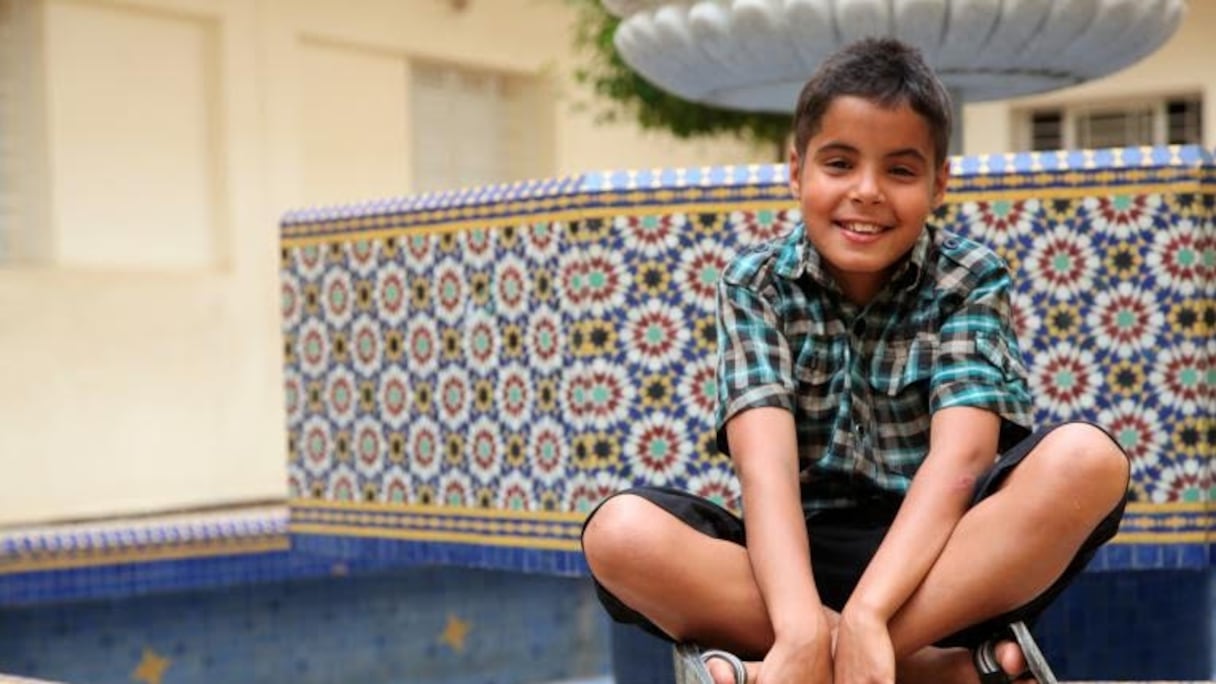
“Children do not vote, but the decisions taken today will shape their future and that of Morocco for decades to come.”
Children are perhaps the last group that comes to mind when we think about elections. The right to vote begins at 18, meaning children are not part of the electorate and do not choose the political parties that will govern or legislate.
But that does not mean they are outside the picture. The policies shaped by elected officials can determine everything from the quality of education and access to health care to social protection, child safety and the ability of families to cope with poverty and climate-related pressures.
This is the central message of a new appeal from UNICEF Morocco, which is urging political actors and decision-makers to make children a central priority in public policies over the next five years.
The appeal, titled “L’Appel de l’UNICEF,” puts forward a series of recommendations covering social protection, health, education, child protection and climate change. UNICEF says the proposals are intended to contribute to discussions around future public policies and strengthen the place of children’s rights in Morocco’s national development priorities.
The organization also calls for greater participation by younger generations in the formulation of public policies and in monitoring their implementation.
The recommendations are organized around five main priorities for the next five years:
1. Build a social protection system that leaves no child behind
UNICEF calls for a stronger and more inclusive social protection system aimed at reducing child poverty and ensuring that vulnerable families have access not only to financial assistance, but also to essential services and social support.
Read also : UN calls for urgent action to protect children from AI and online risks
It recommends addressing gaps that may exclude vulnerable families from direct social assistance, increasing financial support for children with disabilities and ensuring free access to essential health care for the poorest households. UNICEF also proposes strengthening the role of social workers to identify vulnerabilities and connect families with the services they need.
2. Ensure equitable health care for every child
The second priority focuses on improving access to primary health care, particularly for children living in rural and remote areas.
UNICEF recommends strengthening maternal and newborn care, reducing preventable neonatal deaths and developing an approach covering children’s and adolescents’ health and nutrition throughout their lives. This includes addressing malnutrition, mental health, vaccination and the prevention of non-communicable diseases.
The organization also calls for stronger community health services, better health information systems and measures to address shortages and unequal distribution of health workers.
3. Prevent school dropout and strengthen inclusion
UNICEF’s third priority is education, with a particular focus on preventing children from leaving school prematurely.
The organization recommends establishing a national early-warning system to identify students at risk of dropping out, including through greater use of the Massar system and artificial intelligence.
Read also : Addiction, manipulation and parents losing control: Why Morocco should ban social media for minors
It also calls for more diverse educational pathways, stronger support for children with disabilities and better-regulated second-chance schools to help young people who have already left the education system return to learning or vocational training.
UNICEF further recommends making schools safer and more inclusive, including by improving water, sanitation and hygiene facilities.
4. Strengthen protection for vulnerable children
The fourth priority is to develop a more effective child protection system based on prevention and early intervention.
UNICEF recommends establishing integrated child protection mechanisms across Morocco’s provinces, with clear responsibilities, resources and coordination between local actors.
The organization also calls for better systems to identify risks at an early stage, including violence, neglect, school dropout, child marriage, child labor, disability and migration, while strengthening coordination between social workers, schools, health professionals, the justice system and other relevant actors.
5. Make services more resilient to climate change
The fifth priority focuses on the growing impact of climate change on children’s lives, particularly those living in rural and vulnerable communities.
UNICEF recommends incorporating children’s specific vulnerabilities into Morocco’s climate policies and ensuring that schools, health facilities and water and sanitation infrastructure can continue operating during climate-related shocks.
Read also : Ceuta: Moroccan NGO raises alarm over sexual assaults on minors after recent crossings
It also calls for climate change education to be integrated into national school curricula and for children and young people to participate in climate-related policy discussions.
Across all five priorities, UNICEF is proposing action over the next five years, with measures to be introduced progressively, tested and then expanded nationally.
The appeal is ultimately built around the idea that children should remain a central consideration in Morocco’s policy decisions, even though they are not part of the electorate.
The fact that children cannot vote makes it all the more important for their rights and needs to be reflected in the policies that will shape the country’s next five years.