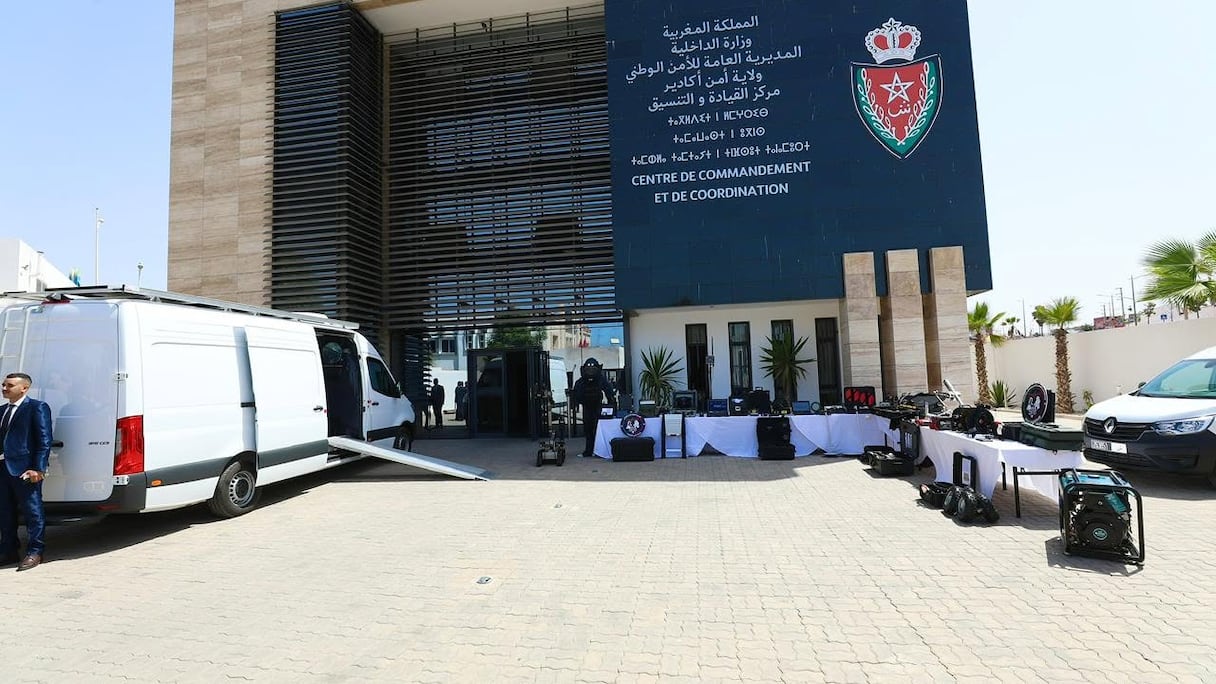
Agadir has become the eighth city to get a regional DGSN explosives unit, bringing specialist bomb detection and disposal capabilities directly under the city’s Security Prefecture.
The unit, launched on Thursday, joins those already operating under the security prefectures of Rabat, Casablanca, Fez, Tangier, Oujda, Marrakech and Laayoune as the DGSN progressively expands its specialist explosives teams across the country.
Based at the Agadir Security Prefecture, the unit will handle suspicious objects and materials, conduct searches for explosives and intervene to neutralise explosive devices.
Its teams will also carry out preventive sweeps and secure venues hosting major sporting, cultural and social events.
The unit can additionally be called on during judicial investigations to provide specialist expertise in the examination and analysis of explosives and explosive devices.
Read also : DGSN-DGST deny any breach of information systems, security databases
Robot and specialist bomb-disposal equipment
The DGSN presented the unit’s personnel and equipment at the Command and Coordination Centre of the Agadir Security Prefecture on Thursday.
Among its equipment is a remotely operated mobile robot designed to handle explosives, allowing specialists to approach and manipulate potentially dangerous objects from a distance.
Teams have also been equipped with protective suits and precision bomb-disposal equipment, along with a specialist vehicle used to transport and deploy their equipment during operations.
Members of the new unit demonstrated some of those capabilities during Thursday’s launch.
Read also : Tangier deploys ‘Madar’ and ‘Aman’ smart patrols to strengthen urban security
Their specialist training was conducted by instructors from the DGSN’s Central Explosives Service in two stages. The first covered the fundamentals of handling explosives, while the second focused on operating specialist equipment in different bomb-disposal and explosive-device scenarios.
The Agadir unit is part of a phased DGSN rollout intended to establish regional explosives capabilities across additional security prefectures, reducing reliance on centrally based specialist teams when suspicious materials or explosive threats require intervention.
