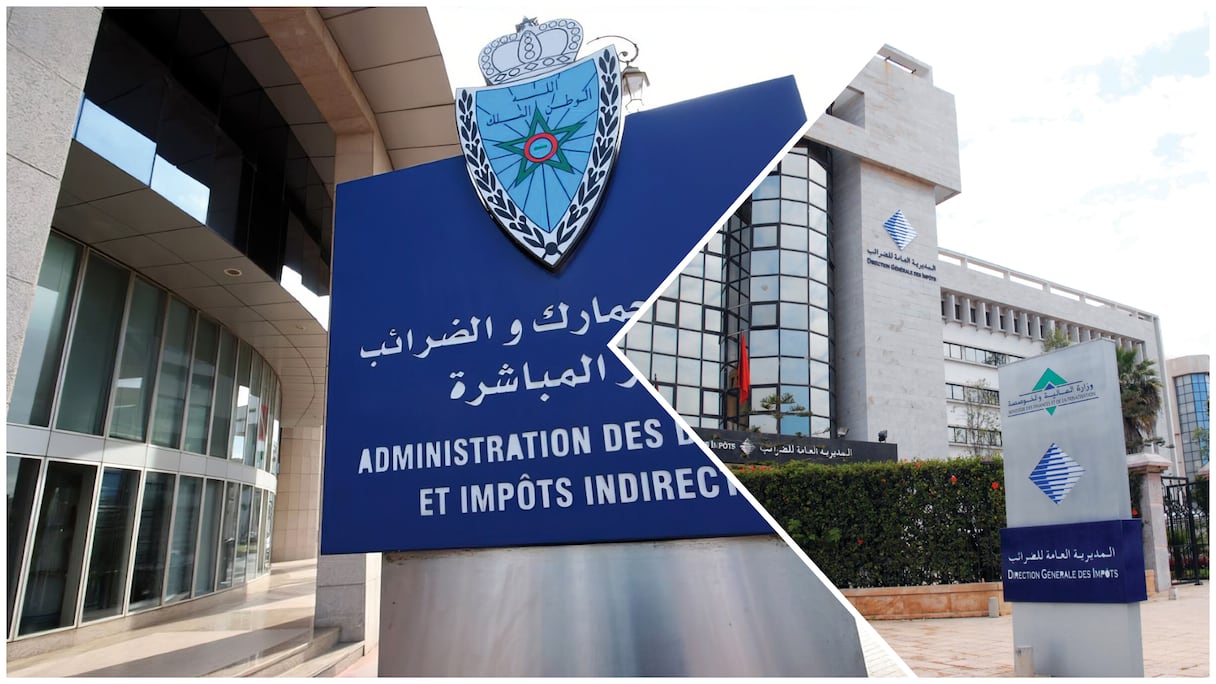
The Ministry of Economy and Finance has published its Budget Execution Report and Three-Year Macroeconomic Framework. The document outlines, among other things, the tax and customs policies adopted under the 2027 Finance Bill (PLF) for the 2027 fiscal year.
On the tax front, the bill comes after the completion of major reforms concerning the main state taxes, in line with the guidelines of Framework Law No. 69-19 on tax reform. The 2027 Finance Bill now aims to ensure the stability of Morocco’s national tax system and consolidate the gains from the reforms already undertaken.
The proposed tax measures are built around two main areas. The first concerns incorporating into Moroccan domestic law the tax guarantees the Kingdom committed to providing as part of its bid to host the 2030 FIFA World Cup. The second focuses on adapting and finalizing tax rules in line with the directions set out in previous finance laws.
Tax guarantees granted to FIFA
As part of the joint hosting of the 2030 FIFA World Cup, Morocco committed in its bid to provide tax guarantees to FIFA and its partners, based on a standardized model established by the organization for all host countries under Government Guarantee No. 3.
Read also : DGI announces tax deadline: who needs to pay and when
These guarantees aim to neutralize the tax impact of operations carried out by FIFA and its partners and simplify the administrative procedures related to organizing the international sporting competition. They cover, in particular, taxes and duties provided for under the General Tax Code, including corporate tax, income tax, value-added tax and registration duties.
The 2027 Finance Bill also proposes introducing a simplified administrative procedure for handling the files of the organizations concerned, with the aim of facilitating their declaration formalities and processing requests related to their tax regime for the 2030 FIFA World Cup and associated events.
Adapting and finalizing tax rules
Following the completion of the major reforms introduced under Framework Law No. 69-19, and with the aim of stabilizing the tax system now in place, the 2027 Finance Bill seeks to adapt and finalize the tax rules currently in force in line with the reforms introduced by previous finance laws.
Adaptation and stabilization measures are therefore planned to address remaining tax constraints and improve the business environment in support of investment and employment.
Read also : Morocco’s tax authority simplifies transport tax incentives with new guide
The customs component of the 2027 Finance Bill, meanwhile, covers several initiatives built around four main areas: supporting national economic policy and major projects, adapting customs taxation and mobilizing revenue, contributing to the protection of the economy and business competitiveness, and combating illicit trafficking.
Supporting major port projects
The first area concerns the ports of Nador West Med and Tanger Med, as well as the Afridouane program. For the Nador West Med port, customs authorities plan to support its entry into service by deploying an efficient customs system based on an appropriate organizational structure, modernized procedures and the mobilization of the necessary human and technical resources. The goal is to ensure the smooth flow of operations, secure trade flows and strengthen the attractiveness of the new logistics platform.
At Tanger Med, the modernization of the customs system will continue through the completion of process digitization, stronger security for goods flows and the elimination of remaining manual procedures. The aim is to facilitate trade, reduce customs clearance times and strengthen the competitiveness of the port platform.
The Afridouane program, for its part, aims to strengthen the role of Morocco’s customs administration as a leading player in South-South cooperation by expanding training programs, technical assistance and expertise-sharing with African customs administrations.
Adapting customs taxation and mobilizing revenue
The second area, concerning the adaptation of customs taxation and revenue mobilization, includes three measures. The first involves strengthening controls on petroleum products to prevent and combat fraudulent practices, including the diversion of products intended for sectors benefiting from exemptions and smuggling, while ensuring fuel quality. According to the authors of the document, the widespread use of tax marking will improve product traceability and secure tax revenue.
The second measure involves introducing green taxation to support national energy transition goals by adapting the legislative and regulatory framework governing domestic consumption taxes on fossil fuels. The objective, the document explains, is to encourage more environmentally friendly behavior while preserving budgetary balances.
The third measure involves strengthening customs intelligence by automating information exchanges with partner administrations under international mutual administrative assistance, while also consolidating reference materials, guides and control procedures based on better use of data.
Combating fraud
The third area of the customs component of the 2027 Finance Bill, which concerns contributing to the protection of the economy and the competitiveness of businesses, includes four measures. The first involves upgrading prior controls by formalizing procedures applicable to industrial acceleration zones, logistics zones, and customs warehouses and areas. According to the Ministry of Economy and Finance, this approach should ensure a better balance between facilitating trade and managing risks.
The second measure is to accelerate the integration of artificial intelligence in the fight against fraud to improve the early detection of fraudulent schemes, optimize the targeting of controls and strengthen risk analysis capabilities.
The third measure involves strengthening the traceability of logistics flows through the deployment of electronic seals and real-time tracking systems as part of efforts to secure transit operations. The goal is to ensure better monitoring of goods and limit the risk of diversion.
Read also : Can tax reform reduce the competitive advantage of Morocco’s informal sector?
The fourth measure involves integrating geolocation controls and body cameras worn by brigade officers into the National Supervision and Control Center. The center already provides centralized video surveillance of customs facilities around the clock, seven days a week.
The fourth area of the customs component of the 2027 Finance Bill, which concerns the fight against illicit trafficking, introduces three measures. The first is to improve controls on travelers through better targeting, the formalization and digitization of certain control procedures, and stronger communication about products made available to them.
The second involves modernizing the national strategy to combat smuggling through the development of a new risk map, stronger analytical capabilities and the automation of post-clearance controls, with the aim of improving the effectiveness of interventions.
The third proposed measure concerns the certification of precious stones and metals, through the introduction of strict controls on the precious stones market and the certification of metals using laser hallmarks. The measure aims to improve the certification system and help combat money laundering, the document explains.