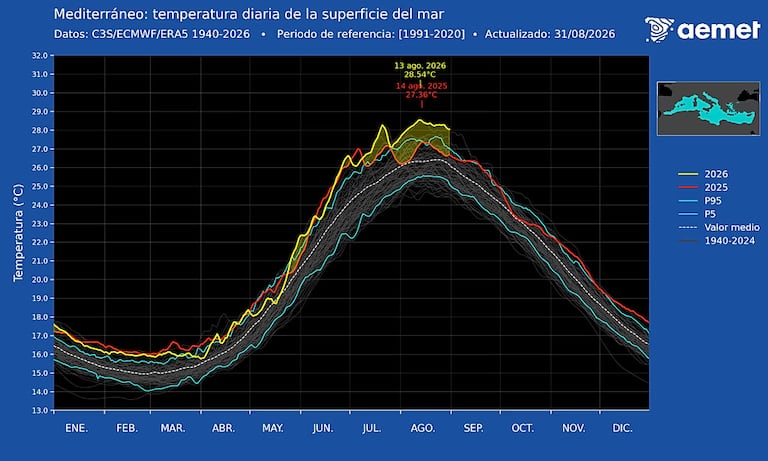
The record came just weeks after July was declared the Mediterranean’s hottest month on record. Mercator Ocean International, which implements the Copernicus Marine Service, recorded an average sea temperature of 27.07°C in July, surpassing the previous record of 26.68°C set in July 2025.
Aemet said the Mediterranean broke daily temperature records throughout almost the entire month of August, with little interruption.
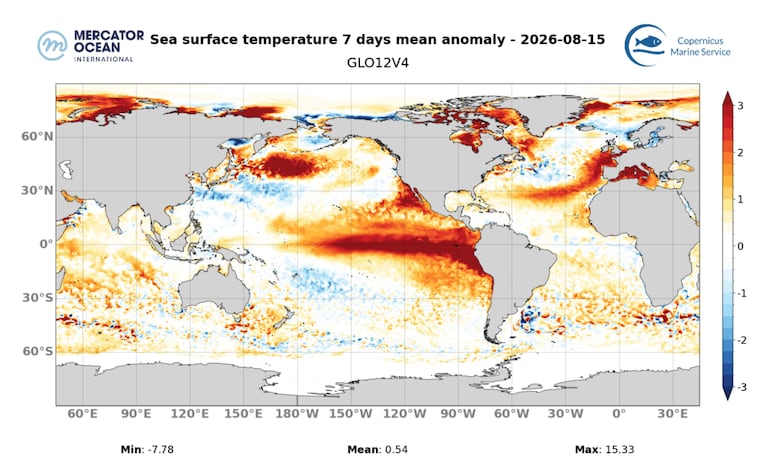
The unusual warmth had already emerged by late June, when Mediterranean waters reached temperatures more typical of the second half of August. Temperatures were then 2.6°C above normal, with the sea exceeding its usual mid-August average while it was still June. Aemet described the situation as exceptional.
The warming was widespread across the basin. About 27% of the Mediterranean recorded its hottest July since 1993, while around 70% of its surface ranked among the four hottest Julys measured during that period.
The record sea temperatures do not by themselves explain high temperatures on land, as atmospheric conditions are influenced by multiple factors. But unusually warm Mediterranean waters can affect coastal conditions because seawater releases heat more slowly than land, making it harder for temperatures to fall at night and increasing humidity near the coast.
Read also : Mediterranean warming could intensify thunderstorms and disrupt air travel, study warns
The accumulated heat can also affect marine ecosystems. Prolonged periods of unusually warm water can stress species adapted to specific temperature ranges, alter species distribution and increase mortality, potentially changing coastal ecosystems.
The Mediterranean’s record comes as global ocean temperatures have also reached exceptional levels. July 2026 recorded the highest global ocean surface temperature in the available record, with an average of 21°C between 60 degrees north and 60 degrees south.
