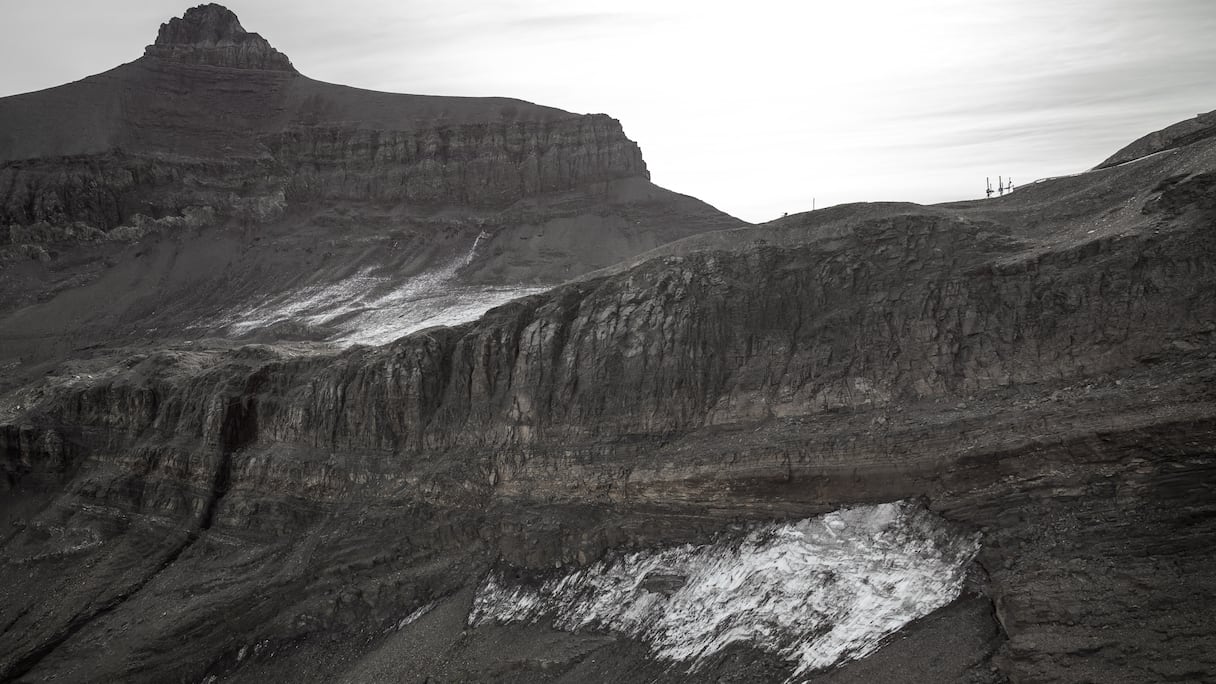
Swiss glaciers lost 5.5% of their ice volume in 2026, the second-largest annual decline on record, after a winter with unusually little snowfall and a summer marked by intense heatwaves, according to the Glacier Monitoring in Switzerland (GLAMOS) network.
The loss means Swiss glaciers have shed nearly one-fifth of their ice over the past five years, highlighting how quickly Alpine ice is disappearing. GLAMOS said the current conditions are incompatible with the long-term survival of Alpine glaciers.
Matthias Huss, director of GLAMOS, described 2026 as a “catastrophic year,” pointing to the combination of low winter snowfall and record summer temperatures. He said extreme melt years are now occurring almost every year.
Read also : El Niño is back: How a warming Pacific could reshape the world
Record melt at major glaciers
Switzerland’s largest glacier, the Aletsch Glacier, recorded its biggest annual melt on record in 2026. Glacier de Tsanfleuron also lost more than four meters of average thickness, according to the latest monitoring data.
Scientists estimate that Swiss glaciers released around 2.2 trillion liters of water between July and September alone, more than four times the annual drinking-water consumption of Swiss households.
The melt provided some short-term relief during summer water shortages. But Huss warned that this benefit will diminish as glaciers become smaller and have less ice available to release during hot and dry periods.
“Every drop of water that runs off during these heatwaves is kind of old water that’s been stocked in the glacier ice centuries or decades ago,” Huss told the BBC. “It’s helping us [now] but it’s unsustainable.”
Read also : Three hurricanes churn across Pacific as WMO warns of worsening extreme weather
Little snow left at high elevations
The unusually rapid melt was not limited to lower parts of the glaciers. Researchers found little or no snow remaining at some measurement sites as high as 3,500 meters above sea level, where glaciers would normally retain substantial snow cover at the end of summer.
Snow accumulation is essential to glacier survival because it eventually compacts into ice and replaces some of the ice lost through melting. When snow disappears too quickly, the exposed ice absorbs more solar energy and melts faster.
The loss of glacier ice could have wider consequences for agriculture, hydropower and transport, while shrinking and destabilizing mountain ice and frozen ground can also increase some risks associated with landslides and flooding.
Read also : Mediterranean Sea hits record 28.54°C as August heat breaks records
GLAMOS said Alpine glaciers have little chance of surviving in the long term if current conditions persist. Some smaller glaciers in Switzerland have already disappeared.
Scientists stressed, however, that reducing greenhouse gas emissions can still limit further ice loss, particularly in the world’s larger ice-covered regions.
