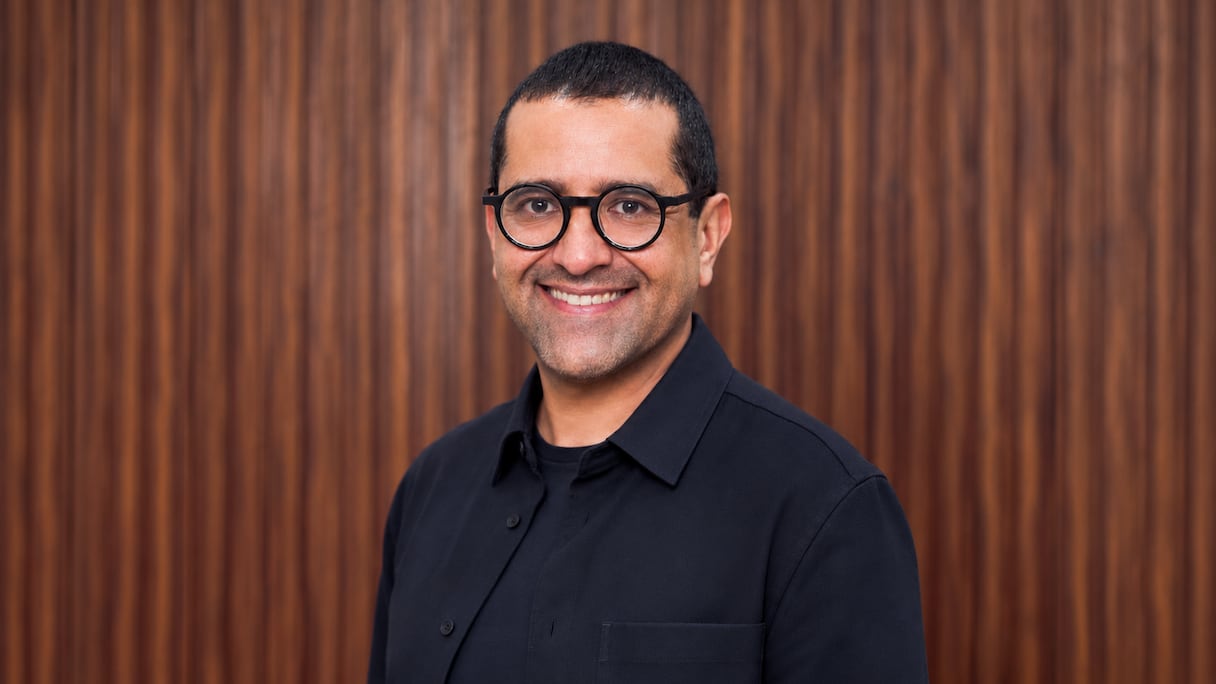
In an interview with Le360, Ali Hajji, the festival’s general coordinator and a member of its selection committee, explained the circumstances behind the withdrawal and discussed the main highlights of this year’s edition, the place of Moroccan cinema in the program and several new features. He also reviewed the achievements of the Atlas Workshops and the festival’s impact on Morocco’s film industry.
As the festival prepares to welcome international film personalities and a new generation of filmmakers, the withdrawal has become one of the main developments in the run-up to the event. Hajji addressed the decision, the thinking behind the selection, the meetings planned with major figures in cinema and the opportunities reserved for Moroccan productions.
Two days before the Marrakech International Film Festival opens, the Palestinian-Syrian film Chronicles From The Siege was withdrawn from the competition. What led to this decision, and will another film take its place?
Ali Hajji: The withdrawal of Chronicles From The Siege follows a decision by the Algerian production company Issaad Film Productions, which holds the film’s rights.
The Palestinian-Syrian director Abdallah Al-Khatib, along with the Palestinian actors and artists who took part in the film, strongly opposed this decision and expressed their wish to present their work in Marrakech.
The film had received support from the Atlas Workshops, the Marrakech Festival’s talent development program for filmmakers and producers from Morocco, the Arab world and Africa. It won the Atlas Award for post-production, worth 20,000 euros, before being selected for the Berlin International Film Festival, where it received the Best First Feature Award.
The festival had to respect the decision of the company holding the rights and took note of the withdrawal. The film will not be replaced, meaning the Official Competition will feature 13 films this year.
What are the main highlights of the 23rd edition, which opens this Friday, November 20?
Over 23 editions, the Marrakech Festival has gradually broadened its horizons, giving increasing importance to everything that happens around films: meetings, discussions, discoveries and projects that take shape. Visitors can watch the first film by a young, still-unknown filmmaker, meet a director whose work they have admired for years, attend a debate in which questions from the audience shed new light on a film just screened, or see hundreds of spectators turn out for a work from the other side of the world.
Alongside this energy are professional meetings, projects developed through the Atlas Workshops and screenings that give younger audiences their first experience of cinema on the big screen. All these dimensions have grown over the years and feed into one another, driven by the same desire to make cinema accessible to as many people as possible.
Read also : Tebboune, the warmonger looking for a war
The program initially announced for this 23rd edition featured 76 films from 39 countries, including 10 world premieres. It brings together very different works, from major American productions to some of the boldest offerings in auteur cinema, with particular attention to emerging generations of filmmakers. It also reflects the vitality of contemporary filmmaking through films that take narrative and aesthetic approaches that sometimes differ considerably.
The festival will open with Jesse Eisenberg’s new film, The Debut, starring Julianne Moore. We will also present Artificial by Luca Guadagnino, which looks back at the creation of ChatGPT; Paper Tiger, a thriller by James Gray starring Adam Driver, Scarlett Johansson and Miles Teller; The Only Living Pickpocket in New York, marking John Turturro’s major return; and La Más Dulce by Laïla Marrakchi, which was chosen to represent Morocco at the Oscars.
A total of 11 films in our program have been selected by their respective countries to compete for the Oscar for Best International Feature Film. This is a particularly significant figure just weeks before the major awards-season milestones.
The Official Competition is the beating heart of our selection. Initially made up of 14 first and second feature films, it showcases filmmakers with already well-defined creative worlds, capable of offering personal perspectives on the world and exploring sometimes unexpected narrative forms. The films will be judged by a jury chaired by Marion Cotillard, who is taking on the role of jury president at a major international film festival for the first time. She will be joined by eight figures with very different backgrounds, including Vicky Krieps, Kaouther Ben Hania, Andrew Haigh, Emma Mackey and Saïd Hamich Benlarbi.
We will also pay tribute to three artists who have left their mark on cinema in their own ways: Jeff Goldblum, John Turturro and Younès Mégri. The Conversations program will welcome 10 personalities, including Xavier Dolan, Cristian Mungiu and Monica Bellucci.
These meetings have become special occasions for audiences to hear artists speak freely about their careers, the films that have influenced them, their cinematic choices and the experiences that have shaped their work.
Finally, the Horizons and 11th Continent sections promise many discoveries. Moroccan cinema will have a particularly strong presence this year, with 12 films, in addition to three Moroccan co-productions directed or co-directed by foreign filmmakers. The Atlas Workshops will also continue their work with Moroccan, Arab and African filmmakers and producers, with 30 projects and films selected for their ninth edition.
How did you select the 10 personalities invited to the Conversations program this year?
The Conversations occupy a special place in the festival’s program. They give us time to explore an artist’s career, understand what drives their filmmaking and revisit the encounters, influences and choices that have shaped their work. We invite people whose experience and approach to their profession can lead to rich, sometimes very personal exchanges with the audience.
This year, we wanted to bring together artists with very different relationships to cinema. James Gray, Cristian Mungiu and Luca Guadagnino have each built deeply personal bodies of work, with distinctive creative worlds and approaches to directing. Rian Johnson has developed an inventive way of revisiting the conventions of genre cinema while reaching a wide audience. Xavier Dolan established himself from his earliest films with a highly intense style of writing and filmmaking, and has followed an exceptional career path. Arthur Harari, meanwhile, belongs to a generation of filmmakers who move freely between writing, directing and acting.
We will also welcome Monica Bellucci, Jeff Goldblum and John Turturro, three artists whose careers span several decades of cinema. They have worked with directors whose creative worlds are sometimes radically different, moving between major international productions and more independent films. Each has developed a very particular relationship with the characters they portray. Their experience offers plenty of material for discussing the acting profession and how a career is built and evolves.
Laïla Marrakchi’s presence is also important. Since Marock, which left its mark on an entire generation of viewers and opened up new perspectives in Moroccan cinema, she has directed Rock the Casbah and pursued a solid career directing international series such as The Bureau and Netflix’s The Eddy. With La Más Dulce, she continues a career that demonstrates her ability to move between different formats and creative worlds. This conversation will be an opportunity to look back on more than 20 years of filmmaking and the evolution of her perspective as a director.
What makes these conversations particularly interesting is the role played by the audience. In Marrakech, spectators often know the films very well and ask precise, sometimes surprising questions. The guests are generally happy to take part in discussions that go beyond the usual promotional interviews. Some conversations take unexpected turns, and that is often where the most memorable moments emerge.
This year’s selection represents 39 countries, compared with 31 last year. How do you explain this growing geographical diversity?
This increase is primarily the result of our programming choices. We are not trying to reach a predetermined number of countries. We select films for their cinematic qualities, without imposing geographical quotas. This year, our choices led us to 39 countries, which also reflects the emergence of film industries that are becoming increasingly visible on the international scene.
This openness is essential in Marrakech. We want to give Moroccan audiences access to works from every continent, including countries whose films are rarely distributed in our theaters. This is also one of the festival’s purposes: allowing films that circulate very little to meet new audiences.
What place does Moroccan cinema occupy in this edition?
Moroccan cinema is going through a particularly interesting period. Production has grown considerably, but what I find especially important is the diversity of films being made today. We have filmmakers from several generations, very different styles of filmmaking, and directors who work in Morocco as well as others who are building careers across several countries.
«There is another development that I think says a lot about how our industry is evolving: foreign directors are now coming to Morocco to tell Moroccan stories, working alongside our actors and crews.»
— Ali Hajji, festival general coordinator and selection committee member
This diversity is a strength. It shows that our cinema is gaining creative freedom and increasingly escaping the categories in which it was long confined.
This year, we are presenting 12 Moroccan films, in addition to three Moroccan co-productions directed or co-directed by foreign filmmakers. That makes 15 films connected to Moroccan cinema, spread across several festival sections.
In the Official Competition, we have Alkebulan, the second feature film by Yassine Marco Marroccu, a work that draws on adventure cinema and demonstrates real ambition in its direction.
The Moroccan Cinema Panorama features six films, including Bardi by Tala Hadid, Cagoules by Mohamed Mouftakir, L’Homme des signes by Zhor Fassi Fihri and Jusqu’à l’aube by Mohamed Zineddaine. We are also presenting Toutes sauf ma mère by Mohcine Besri in the Young Audience and Family section. These are very different films, showing the wide range of subjects and creative territory explored by Moroccan filmmakers.
There is also a phenomenon that I find revealing of the evolution of our industry: foreign directors are now coming to tell Moroccan stories, working with our actors and crews.
Waves of Silence by Iranian-Norwegian filmmaker Farzad Samsami was shot in Morocco, in Darija, and features Amine Ennaji, Nisrin Erradi and Younès Bouab, among others. Les Roses de Marrakech by Italian director Ginevra Elkann brings together Nisrin Erradi and Fanny Ardant. And Leila et la nuit, by Brazilian director Fellipe Barbosa, with Othmane Zine as co-director, revisits the tragic life of photographer Leïla Alaoui.
These three co-productions also illustrate foreign filmmakers’ interest in stories rooted in Morocco, which they choose to tell with the help of Moroccan actors and professionals. Such collaborations bring different perspectives on our country and allow Moroccan talent to take part in projects led by directors from diverse backgrounds.
More broadly, Moroccan cinema has come a long way since the festival was founded in 2001. Production has expanded, new generations of filmmakers have emerged, and Moroccan films regularly appear at major international festivals. What is particularly interesting today is the diversity of styles and creative worlds taking shape, as this year’s Moroccan selection demonstrates.
Several films in the competition address conflicts, violence and social divisions. What do they reveal about the concerns of a new generation of filmmakers?
This competition offers a fascinating glimpse into the different ways a new generation of filmmakers views the contemporary world. Their films tackle sometimes complex political and social realities, but what distinguishes them above all is the freedom of their approaches, the diversity of their styles and their ability to renew the forms of cinematic storytelling. Behind stories often rooted in very specific contexts, we discover concerns and questions that resonate far beyond national borders.
That said, it would be reductive to look at this selection only through the subjects it addresses. What makes a film valuable is also the way its director transforms reality into cinema.
Take Furies by Rami Kodeih. The film is set in Lebanon during the economic crisis, but the filmmaker chooses to tell this story through a bank robbery, with the energy and tension of a thriller. Congo Boy by Rafiki Fariala follows a young refugee who dreams of making music. It is a film in which the desire to live and create occupies a central place.
Other works explore more intimate territory. Chicas tristes by Fernanda Tovar examines a friendship disrupted by sexual assault. The World Before by Yoon Dan-bi approaches the first stirrings of romantic feelings with great delicacy. And A Day in the Life of Jo: Chapter Phaedra by Jacqueline Lentzou offers an especially free-form style of storytelling that plays with the boundaries of realism.
What emerges from this selection is a generation that refuses imposed forms. These filmmakers move from one genre to another, mix styles and sometimes invent highly unexpected narratives to speak about their time.
I also believe we should be wary of the temptation to ask young filmmakers to represent their countries or testify to the world’s hardships. We select them first and foremost for their talent, the originality of their perspective and their ability to invent their own cinematic language. Some are already demonstrating impressive control and freedom in their directing, even in their first or second feature films.
Twelve films in this edition have gone through the Atlas Workshops. What is your assessment of the program?
There is one figure I find particularly telling: since 2019, 42 films supported by the Atlas Workshops have been selected for Cannes, Venice or Berlin. For a program created in 2018, that is a considerable achievement. This year, 12 films developed through the Workshops are included in our own selection, bringing the total number of such works presented at the festival over the years to 55.
«Since their creation, the Workshops have supported 242 projects and films, including 111 from Morocco. This year, we received 410 applications and selected 30 projects and films. These figures show how the Workshops have become an established gathering place for film professionals from across the region.»
— Ali Hajji, festival general coordinator and selection committee member
These results matter because they reflect exactly what we set out to build: a space where Moroccan, Arab and African filmmakers can develop their projects, meet partners, access funding and find their place in an international industry whose mechanisms can sometimes be difficult to navigate.
Since their creation, the Workshops have supported 242 projects and films, including 111 Moroccan ones. This year, we received 410 applications and selected 30 projects and films. These figures show how the Workshops have become an established and sought-after meeting point for professionals in the region.
But behind the statistics are the journeys of films and filmmakers. I think of The Mother of All Lies by Asmae El Moudir, which received recognition at Cannes and then won the Golden Star in Marrakech in 2023, before going on to enjoy an exceptional international career. Or La Más Dulce by Laïla Marrakchi, which we supported at several stages of its development and which was selected this year for Cannes’ Un Certain Regard section.
It is also interesting to see that the Workshops welcome both young directors preparing their first films and filmmakers who are already established. This creates a working environment in which experiences intersect and collaborations can emerge naturally.
We have gradually expanded this approach through the different Atlas programs. Atlas Station supports young Moroccan professionals. Atlas Press is a workshop introducing participants to film criticism and helping them develop their skills. The Atlas Distribution Meetings and Atlas Distribution Awards focus on a decisive question: how can films circulate and find their audiences?
A film can attract attention at a major festival and then face enormous difficulties getting distributed. This is a particularly acute reality for the film industries in our region.
The Workshops have therefore taken on a role that now goes beyond project development alone. They contribute to building a professional ecosystem, creating lasting networks and supporting the emergence of new generations of filmmakers and producers. This is one of the festival’s achievements of which we can be particularly proud.
The festival has always defended free access to screenings. How does this commitment translate into practice for audiences?
Free admission is one of the festival’s founding principles, and we are deeply committed to it. It allows people who do not necessarily have a habit of going to the cinema to discover films from around the world, meet their directors and take part in a major international cultural event.
I believe this has played an essential role in the relationship the festival has built with its audience in Marrakech. We have many loyal spectators who have followed the festival for years, but also many young people who discover films they would probably never otherwise have had the opportunity to see.
This year, we are offering 106 screenings and 88 presentations and discussions at the Palais des Congrès, Le Colisée cinema and the Yves Saint Laurent Museum. Whenever possible, screenings are accompanied by members of the films’ creative teams.
The presence of directors and actors fundamentally changes the audience’s experience. A film often takes on another dimension when spectators can listen to the person who made it after the screening, understand their choices or ask them a question directly.
We also pay particular attention to younger audiences. The Young Audience and Family section offers 11 screenings for children, teenagers and their families. It is important that the festival should also be a place where first experiences of cinema are formed, the kind people remember for a long time.
We welcomed nearly 45,000 spectators during the last edition. This figure reflects the place the festival now occupies in Marrakech’s cultural life.
There is something remarkable about seeing theaters filled for films from very different countries, sometimes without well-known stars or any prior commercial exposure. It shows that Morocco has a curious audience, open to challenging films, provided it is given the opportunity to discover them.
Beyond its artistic and international profile, what concrete impact does the festival have on Morocco’s film industry?
I believe one of the festival’s most important developments lies precisely here. Over the years, Marrakech has acquired a position that allows it to contribute to several aspects of our cinema: discovering talent, developing films, fostering professional collaborations, supporting their international circulation and bringing them to audiences.
When the festival was founded in 2001, Morocco’s film landscape was very different. National production was still limited, opportunities to meet major international professionals were much rarer, and financing and co-production options were less developed.
The festival has accompanied the transformation of that landscape. It has allowed Moroccan filmmakers to present their work alongside films from around the world, before audiences, critics, distributors and international industry professionals. These connections are essential because a film career is also built through meetings, exchanges and collaborations.
«We talk a great deal, and rightly so, about the international recognition of our cinema. But its development also depends on its ability to reach audiences in Morocco. A festival like Marrakech can help strengthen that relationship, create curiosity about our films and make cinema part of the cultural habits of new generations.»
— Ali Hajji, festival general coordinator and selection committee member
With the creation of the Atlas Workshops in 2018, we took another step forward. Today, we have a professional program that provides concrete support for films, from their earliest development stages to distribution challenges. The results are clear: works supported in Marrakech are subsequently appearing in the selections of the world’s leading festivals.
This international presence has very tangible consequences. It facilitates access to new partners, strengthens producers’ credibility, opens up funding opportunities and helps introduce Moroccan talent to professionals who may later work with them on other projects.
The festival contributes to this momentum by connecting people and giving films visibility. The importance of these encounters should not be underestimated. A director may find a future producer, a project may convince a foreign partner, or a film may attract the attention of a distributor. Sometimes a few minutes of conversation can move a project forward by several years.
There is also a dimension I consider fundamental: the relationship with Moroccan audiences. We talk a great deal, and rightly so, about the international recognition of our cinema. But its development also depends on its ability to reach audiences in Morocco. A festival like Marrakech can help strengthen that relationship, create curiosity about our films and make cinema part of the cultural habits of new generations.
Today, Marrakech brings together world-renowned artists, young filmmakers, producers, distributors, critics and large audiences at a single event. This concentration of talent and expertise creates momentum whose effects continue throughout the year.
That is probably the best measure of how far the festival has come: it now matters as much for the films it presents as for those it helps bring to life and send out into the world.
