Inside a historic building in the Kettanine neighborhood, Bank Al-Maghrib has chosen to document an aspect of the Kingdom’s history through a modern museum dedicated to the history of money. The museum houses coins, tokens and banknotes that reflect the changes Morocco has undergone over the centuries, using currency as a lens through which to explore the country’s political, economic and cultural history, while also showcasing the artistic and technical richness of Morocco’s numismatic heritage.
Recently inaugurated in Fezel-Bali, the historic building traces the evolution of currency and means of payment in Morocco, from the periods before the emergence of money through the Islamic period and the Alaouite dynasty to the currency in circulation today. It also features commemorative coins marking major national and international milestones and events.
“The Museum of Money has found its place in the heart of Fès’ old medina, in a historic building that reflects the richness and distinctiveness of Fassi architecture, giving the museum an added dimension tied to the history of the site itself,” said Mohamed Khalil Serhane, the museum’s cultural outreach manager.
Serhane explained that the more than 105-year-old building was originally a fondouk, a traditional lodging place for merchant caravans stopping in Fès. In 1921, it became the second branch of the State Bank of Morocco in the Kingdom, after the Tangier branch. After the branch was moved to the new city, the building housed an annex of the national security service before plans were made in 2018-2019 to convert it into a museum of money.
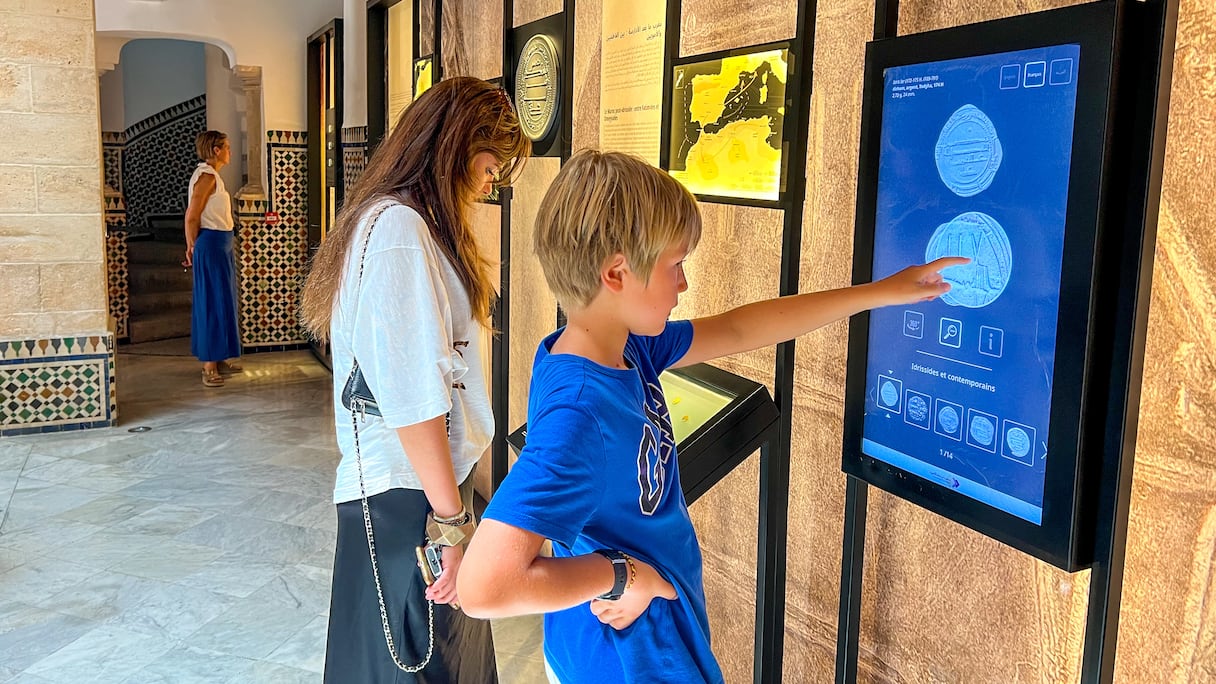
As for the museum’s design, Serhane said it combines the authenticity of the historic building with contemporary museum technology. Touchscreen interactive displays allow visitors to examine coins from different angles through 360-degree views. Other digital features allow visitors to explore the characteristics and security features of Moroccan banknotes.
Read also : Inside Fèz’s Chouara Tannery: How Morocco’s centuries-old leather craft survives
The experience goes beyond coins and banknotes. The museum also houses a representation of Dar As-Sikkah, along with measuring instruments and tools once used to process precious metals. Visitors can therefore explore the technical aspects of minting currency, in addition to its economic, historical, artistic and cultural dimensions.
Bank Al-Maghrib hopes to make the museum a new stop on the medina’s museum circuit. Since its opening, it has attracted strong interest from both Moroccan visitors and foreign tourists. Admission remains free throughout the current month. Starting next month, an admission fee of no more than 20 dirhams per person will be introduced, with discounted rates for groups. Children and students will continue to enter free of charge throughout the year.
Among the visitors is Alexandra, a French tourist whose curiosity led her to explore the museums of Fez el-Bali. For her, the visit went far beyond discovering the history of money.
“The architectural details of this museum alone are worth taking the time to admire. Discovering how Moroccan currency evolved over the centuries and the changes that accompanied it from one reign to another gives the visit a distinctive historical dimension,” she said.
The visitor was also particularly captivated by the oldest coins and the traces of craftsmanship they still bear. In her view, the museum offers a way to connect with Morocco’s living heritage and discover a unique facet of the Kingdom’s history.
For the French tourist, the combination of the building’s historic character, the richness of the collections and the way they are presented makes the Museum of Money a “unique” space, worth discovering not only for foreign visitors but also for Moroccans who want to explore their country’s history from a different perspective.
Key pieces and numismatic treasures
The Idrissid dirham:The first Islamic coins minted in Morocco reflect the early assertion of monetary sovereignty under the Idrissid dynasty.
Almoravid and Almohad dinars: These gold coins illustrate the economic power and extent of trade in medieval Morocco, particularly with sub-Saharan Africa and the Mediterranean region.
Saadian and Alaouite coins: The collection traces the evolution of Morocco’s monetary system under these dynasties through to the reforms of the modern and contemporary periods.
Banknotes and commemorative coins: Part of the exhibition traces the development of paper currency in Morocco and also features issues and commemorative medals linked to national events.
