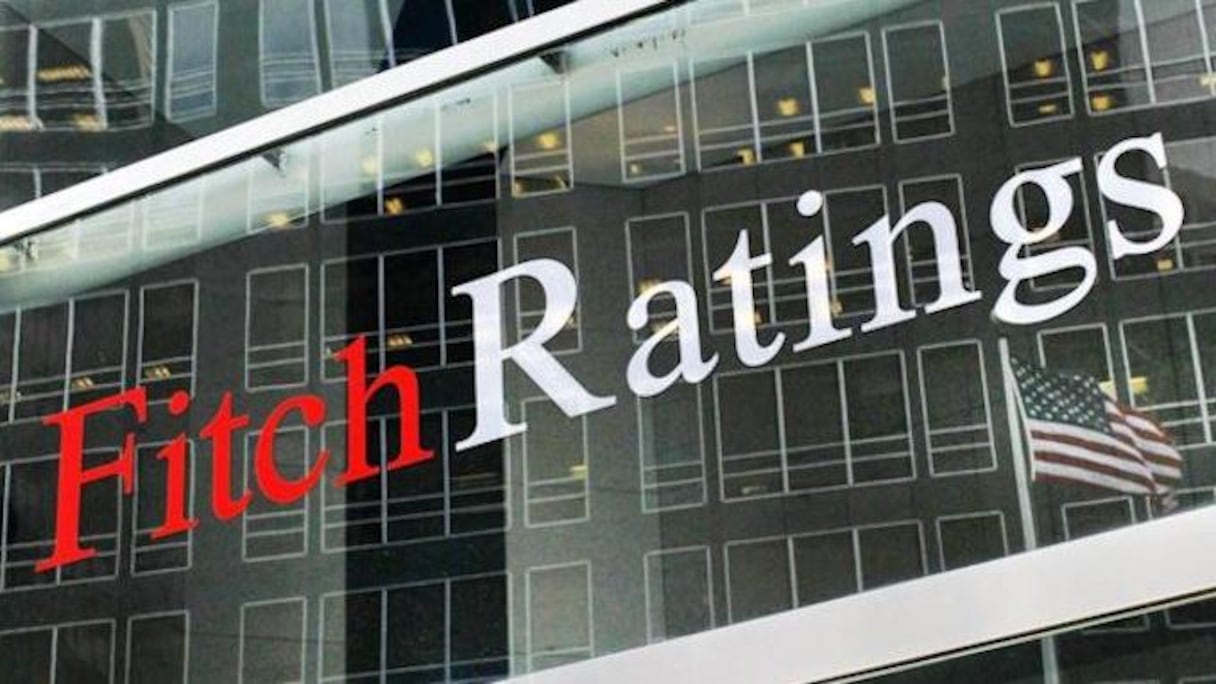
Fitch Ratings has maintained Morocco’s sovereign rating at “BB+,” with a stable outlook, according to an analysis published Thursday, September 17. The rating reflects what the agency considers to be strong macroeconomic policies, adequate external liquidity reserves and significant support from official creditors.
These strengths are nevertheless offset by development and governance indicators that are weaker than those of some comparable countries, a high level of public debt and the economy’s strong exposure to climate-related risks.
On the budgetary front, Fitch expects public finances to deteriorate temporarily in 2026, with the budget deficit reaching 4% of GDP, compared with 3.5% in 2025.
Read also : African agriculture adaptation: AAA Initiative marks 10 years with roadmap to 2036
The increase would be mainly linked to additional spending caused by the Strait of Hormuz crisis and rising energy prices. The agency specifically cites higher butane gas subsidy costs, continued support for transport operators and increased transfers to the National Office of Electricity and Drinking Water (ONEE).
These expenses are expected to more than offset the growth in tax revenues, supported in particular by tax reforms, improved tax compliance and more efficient collection.
Fitch nevertheless anticipates an improvement from 2027, with an average budget deficit of 3.4% of GDP in 2027-2028, as spending related to the energy shock gradually eases.
The agency expects Treasury debt to remain almost stable at around 67% of GDP in 2028, the same level recorded in 2025. This ratio, however, remains well above the projected median of 51% for countries rated in the “BB” category.
Fitch nevertheless highlights the relatively favorable structure of Morocco’s debt. Refinancing and foreign exchange risks are mitigated by long maturities, a high proportion of fixed-rate borrowing and significant use of concessional external financing.
The 2030 World Cup: A Risk for Public Finances?
This is one of the main areas of concern raised by Fitch. Morocco has launched a major infrastructure program in preparation for the 2030 World Cup. According to the agency, a large share of these investments is expected to be carried out by state-owned enterprises, public-private partnerships and other entities outside the government’s direct budgetary perimeter.
This arrangement helps limit the apparent short-term impact of these investments on the budget. However, it is not without risks.
Fitch therefore believes that public finances could be exposed to cost overruns or additional needs that could eventually become the state’s responsibility.
Investment spending directly included in the budget is also expected to remain high, averaging 7.5% of GDP in 2027-2028, particularly in connection with preparations for the World Cup.
On the external front, Fitch expects the current account deficit to widen to 3.8% of GDP in 2026, compared with 2.5% in 2025.
Higher energy costs in the wake of the Strait of Hormuz crisis, along with weaker European demand, are expected to weigh on the external accounts. These effects would be partially offset by higher phosphate exports and tourism revenues.
The current account deficit is then expected to narrow to an average of 2.6% of GDP in 2027-2028, supported in particular by the normalization of energy prices and an improvement in the external environment.
Fitch also highlights the strengthening of Morocco’s external position. Foreign exchange reserves reached $48 billion at the end of 2025.
Reserves are expected to cover an average of 5.1 months of current external payments over the 2026-2028 period, compared with 5.9 months in 2025. This is slightly above the 4.9-month median recorded for the “BB” category.
Morocco also benefits from an additional safety net in the form of the $4.5 billion Flexible Credit Line approved by the International Monetary Fund in April 2026.
Growth Expected to Reach 4% in 2026
Fitch expects economic growth to slow in 2026. Real GDP is projected to grow by 4%, down from 4.9% in 2025, before accelerating slightly to an average of 4.2% in 2027-2028.
The slowdown in 2026 would be explained in particular by the impact of the Strait of Hormuz crisis on energy and transport costs, as well as weaker external demand, particularly from Europe.
A good agricultural season, supported by higher rainfall, along with continued investment in infrastructure, industry and tourism, should nevertheless help sustain economic activity.
Read also : Bank Al-Maghrib seen holding the line at 2.25%
With legislative elections scheduled for September 23, 2026, Fitch believes their outcome is unlikely to lead to any significant change in the direction of economic policy.
The agency expects the authorities to maintain their course of fiscal consolidation, regardless of the composition of the next government.
Fitch nevertheless identifies a risk linked to social tensions and demands concerning public spending priorities. According to the agency, increased calls for social spending could push budgetary expenditure above its baseline scenario.