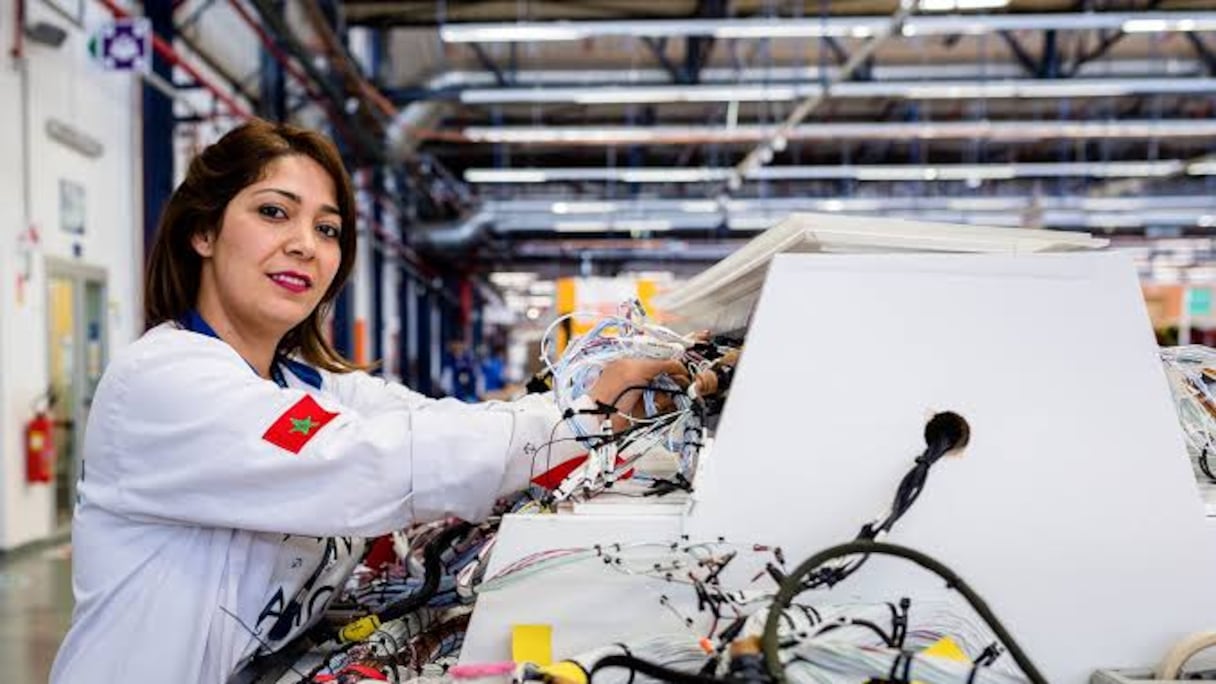
Africa remains weakly integrated into the global aerospace industry. Only three African countries, Morocco, South Africa and Tunisia, have managed to establish a foothold in this highly specialized sector. They increasingly manufacture and assemble components used in aircraft and aircraft sections produced by global industry leaders, including Airbus, Boeing, Bombardier, Safran, Thales and Embraer.
This integration generally takes the form of subsidiaries belonging to major aerospace manufacturers and contractors, alongside local companies producing increasingly sophisticated components. Some countries, however, have moved beyond component manufacturing and begun building light aircraft.
Tunisia is one example. For several years, it has exported light aircraft to numerous countries in Europe, the Americas, Africa and Asia.
Although South Africa has the continent’s oldest aerospace industry, supported by a long-standing manufacturing, maintenance and defense industrial base, Morocco and Tunisia have become the countries making the most progress in integrating into the global aerospace supply chain in recent years.
South Africa’s established industry includes Denel Aeronautics, which manufactures light military aircraft, helicopters, drones and integrated defense systems, and Aerosud Aviation, which produces precision fuselage parts, aircraft interiors and structural components for Airbus, Boeing, BAE Systems and Embraer.
Over the past quarter-century, Morocco and Tunisia have together attracted around 245 international and local companies, including major global players such as Airbus, Boeing, Safran and Bombardier.
Read also : Africa’s fuel squeeze: Higher pump prices, bigger import bills and rising costs
The two North African countries benefit from several advantages. First, both have adopted strategic plans to develop their domestic aerospace industries and integrate them into the global supply chain. Tunisia entered the sector first, but Morocco has made greater progress, supported by a sustained industrial strategy.
Their geographical proximity to major aerospace companies, including Airbus, Boeing, Bombardier, Safran, General Electric, Pratt & Whitney, Thales and Collins Aerospace, is another advantage. Both countries also have skilled workforces trained at engineering schools and specialized or industry-focused training centers. These institutions supply local and foreign companies with the skills they need.
Labor costs are also highly competitive compared with Europe and the United States, encouraging companies to relocate labor-intensive activities such as wiring.
The development of aerospace ecosystems has also been supported by dedicated industrial zones, infrastructure and investment incentives. These include Midparc in Casablanca and the El Mghira Aeropole in Greater Tunis. The industrial zones provide the infrastructure companies need to establish operations and offer incentives to foreign investors.
Both countries also provide tax and customs advantages. In addition to dedicated industrial facilities, export-oriented companies benefit from exemptions on export duties and taxes, as well as the removal of tariffs on equipment and raw materials imported from the European Union.
Political stability and economic openness have also helped the sector grow in both countries. Tunisia’s instability since 2011 has, to some extent, hindered the development of its aerospace industry over the past 15 years. During the same period, Morocco accelerated its integration into the global supply chain, attracting international companies and moving into more sophisticated activities.
With more than 20 years of accumulated expertise, both countries are now well integrated into a global aerospace industry that continues to expand.
Morocco: Africa’s leading aerospace exporter and most integrated player
Over the past 25 years, Morocco has established itself as Africa’s leading aerospace manufacturing hub. The country began attracting major international aerospace manufacturers in 1999, with the arrival of SERMP (Société d’étude et de réalisation mécaniques de précision) and the creation of Snecma Morocco Engine Services (SMES), a joint venture between Royal Air Maroc and Snecma, now Safran. The company later became Safran Aircraft Engine Services Morocco.
Two years later, the creation of Matis Aerospace, a joint venture between Safran, Boeing and Royal Air Maroc, marked Morocco’s entry into aerospace production.
Read also : African Diaspora Remittances: Here are the top 10 recipient countries
In the early 2000s, Morocco had only five pioneering companies in the sector. Since then, its aerospace ecosystem has expanded considerably and now includes nearly 160 international and local companies.
Several aerospace segments are now established in Morocco, including engineering, electrical wiring interconnection systems, assembly, engines, maintenance, repair and overhaul (MRO), and composite materials. Other segments are under development, including the space industry, higher-value activities across the supply chain, aircraft cabin interiors and landing gear. These ecosystems have helped integrate Morocco into the global aerospace supply chain.
This development is the result of a deliberate strategy designed to build the industrial ecosystem needed to support the sector. The first major step was the launch of the Emergence Plan in December 2005, which aimed to modernize and improve the competitiveness of the Moroccan economy. The plan designated aerospace as one of Morocco’s “global trades,” alongside five other sectors: automotive, offshoring, electronics, textiles and leather, and agrifood.
The creation of the Moroccan Aerospace Industries Association (GIMAS) in 2006 helped support and organize the development of the country’s aerospace platform. The National Pact for Industrial Emergence, introduced in 2009, followed by the first Industrial Acceleration Plan for 2014-2020 and its second phase for 2021-2025, accelerated the sector’s growth through the development of integrated industrial ecosystems.
This strategy also led to the establishment of dedicated free zones, including the Nouaceur Aeropole and Midparc Casablanca Free Zone. Reserved for aerospace and related technologies, these zones host major industry players and benefit from free-zone status. Their proximity to Mohammed V International Airport and the Port of Casablanca, together with support services tailored to aerospace companies, makes them attractive locations for investment.
Companies established in these zones also benefit from numerous tax incentives. As a result, the vast majority of Morocco’s approximately 160 aerospace companies operate in the two dedicated areas. They include subsidiaries of major international groups such as Boeing, Airbus, Safran, Hexcel, Eaton, Mecachrome, Daher and Stelia.
Read also : Africa’s largest airline fleets in 2026: Ethiopian leads as Royal Air Maroc posts fastest growth
The availability of skilled workers has been another key factor in the industry’s development. In addition to graduates from Moroccan schools and institutes, the sector relies on the Institute for Aerospace Trades (IMA), established in 2008 and operational since 2011 under a public-private partnership involving the Moroccan state, GIMAS, France’s Union of Metallurgical Industries and Trades, and the French Development Agency.
IMA has trained more than 16,000 people in occupations covering 85% of the aerospace industry’s workforce needs in Morocco. These include machining, welding, painting, wiring, metal and composite assembly, fuselage and door manufacturing, nacelles, electrical connections, engine components and aerostructures.
The ecosystem also relies on ISMALA, the Specialized Institute for Aerospace Trades and Airport Logistics, as well as a center specializing in MRO training. Other institutions include AEROSUP Casablanca and the Africa Center for Manufacturing Excellence (ACME), a more recent initiative launched in partnership with Mohammed VI Polytechnic University (UM6P) and industry players including Boeing and Airbus.
Together, these factors, combined with Morocco’s proximity to major aerospace customers in the European Union, the United States and Canada, its political stability and its economic openness, have helped the country establish itself as a reliable partner for international manufacturers such as Airbus, Boeing, Safran and Thales. Morocco has become an attractive destination for cost-efficient production, while also developing new, higher-value aerospace skills and activities.
New investments are gathering pace, as shown by announcements made on the sidelines of the Marrakech Air Show 2026, which ended on October 10.
Safran Oil Systems has earmarked 11 million euros to build a factory producing lubrication systems for aircraft engines. Matis Aerospace, a subsidiary of Boeing and Safran Electrical & Power, plans to invest $16.5 million in an aerospace electrical wiring plant expected to create 750 jobs.
APS Coating is investing 18 million euros in a facility for surface treatment of aerospace components, with 120 direct jobs planned. Mecapole, meanwhile, will invest 10 million euros to expand its precision machining capacity for parts used in aircraft and helicopters.
Morocco’s performance is reflected in the figures. The country ranks as the fifth most attractive destination for aerospace investment worldwide and the leading destination in Africa. It now hosts more than 160 companies, employs around 27,000 people and has a local integration rate of 40%, with a target of 50% by 2030. The sector accounts for 3.5% of Morocco’s gross domestic product.
With its aerospace industry geared toward international markets, Morocco’s performance can also be measured through exports. Aerospace exports reached 29.1 billion dirhams, equivalent to around $3 billion, up 10% from the previous year. The sector has become the country’s fifth-largest contributor to industrial export revenue.
Read also : US consolidates visa processing into 20 African hubs, ending services in 25 countries
During the first eight months of 2026, aerospace exports rose by 21.5%, an increase of 4.07 billion dirhams, to reach 22.97 billion dirhams. The growth was driven by higher sales in the assembly segment, which added 3.37 billion dirhams, as well as by electrical wiring interconnection systems (EWIS).
Morocco aims to increase annual aerospace exports from $3 billion to $5 billion by 2029. Achieving that target will require attracting more companies and moving domestic production up the value chain. The priority is to increase the value added locally by moving beyond the manufacture of simpler components and expanding into more sophisticated activities, including assembly and the production of aircraft engine parts and landing gear.
The sector’s growth prospects are encouraging. Investment agreements signed on the sidelines of the Marrakech Air Show 2026 include the Safran Oil Systems factory for aircraft engine lubrication systems and Matis Aerospace’s planned aerospace electrical wiring facility.
In April 2026, Pratt & Whitney Canada inaugurated a factory producing engine components in Nouaceur. Safran is also building a maintenance center for LEAP engines, backed by an investment of 120 million euros. The center is expected to begin operations in 2027, with capacity to service 150 engines annually and plans to create 600 jobs by 2030.
The French group, which already has a substantial presence in Morocco, is also establishing an assembly line for LEAP-1A engines, with an annual capacity of 350 engines. The project represents an investment of 200 million euros and is expected to create 300 jobs.
In February 2026, Safran also announced a 280-million-euro investment in a factory producing landing gear equipment. The facility is scheduled to become operational in 2029 and is expected to create 500 jobs once fully operational.
Morocco’s aerospace industry is therefore on course to consolidate its leading position in Africa while moving into segments with significantly higher value added.
Tunisia: From wiring to light aircraft manufacturing
Like Morocco, Tunisia has integrated itself into the global aerospace supply chain through industrial policy, sustained investment and the presence of numerous subcontractors and equipment manufacturers.
Tunisia’s aerospace industry includes around 85 international and local companies and directly employs more than 20,000 skilled workers.
Major international subcontractors and equipment manufacturers operating in the country include Safran, which entered Tunisia in 2024 and designs onboard systems, equipment and aircraft interiors there. Other companies include Airbus Atlantic, Corse Composites Aéronautiques (CCA), Pursuit Aerospace, Figeac Aéro, Zodiac Aerospace, Mecachrome, Hutchinson, Latécoère, Sogeclair Aerospace, Sabena Technics, Aksa Composites and IAT.
These companies mainly manufacture wiring, onboard systems, aircraft equipment and interiors, aircraft parts and subassemblies, composite components, precision-machined parts and aerostructures.
They are represented by the Tunisian Aerospace Industries Group (GITAS), an employers’ association established in 2006 that brings together major aerospace companies operating in the country, including Safran, Airbus Atlantic, Latécoère, Mecachrome and Hutchinson.
As in Morocco, dedicated industrial zones support the sector. A large share of aerospace companies is based at the El Mghira Aeropole, located around 10 kilometers from Tunis and covering more than 200 hectares. The site is connected by road to the Port of Radès, the country’s largest seaport.
Read also : Morocco emerges as Africa’s new tourism leader
These dedicated zones offer companies a range of advantages and tax incentives.
Professional and academic training is another pillar of Tunisia’s aerospace industry. The country produces more than 65,000 graduates annually, a substantial proportion of whom specialize in science, technology, engineering and mathematics (STEM). It also has around 47 engineering schools and 15 specialized training centers.
Several institutions and training centers specifically serve the aerospace industry. These include ESAT, the Higher School of Aeronautics and Technologies; INSAT, the National Institute of Applied Sciences and Technology; ENIT, the National Engineering School of Tunis; CIMA, the Aerospace Trades Engineering Center established by Telnet Holding and Safran; CEMIA, the Center of Excellence for Aerospace Industry Trades, located at the El Mghira Aeropole in Ben Arous; and Sfax Aerospace Valley.
The training network expanded on September 23, 2026, when Figeac Aéro Tunisie inaugurated a new training center for aerospace industry occupations at the El Mghira Aeropole.
These institutions supply the industry with skilled workers at labor costs that are highly competitive compared with those in rival countries and significantly lower than in the countries where major aerospace contractors are based.
These advantages continue to attract investment. US-based Pursuit Aerospace plans to expand its Tunis industrial site by 40%. The facility specializes in manufacturing aircraft engine components and is expected to employ more than 1,000 people.
The company’s Tunisian subsidiary manufactures precision metal components for aircraft engines, including parts made from nickel and cobalt alloys. These materials are used in components exposed to high temperatures and substantial mechanical stress.
The planned expansion follows the extension of Mecachrome’s operations, which focus on precision machining of mechanical parts and assemblies. It also comes after Turkish company AKSA Composites announced its first investment in Africa.
Tunisia’s aerospace industry extends beyond components and wiring into the construction and assembly of light aircraft. The country belongs to a small group of manufacturers producing light aircraft with two to four seats.
Avionav, based in Borjine in the governorate of Sousse, has manufactured aircraft since 2014. Its products include carbon-fiber composite aircraft under the Rallye models, aluminum aircraft under the Storm range, and seaplanes produced in partnership with Evada Aircraft.
The company has an annual production capacity of 80 aircraft and employs 140 people, including engineers and technicians.
Avionav has exported dozens of aircraft to Europe, the United States, the Middle East and Africa. Its aircraft have reached around 20 countries, including Italy, Spain, the United Kingdom, France, Algeria, Morocco, Jordan and Saudi Arabia.
They are used for pilot training, short-distance travel, advertising campaigns, air surveillance missions and pesticide spraying.
Like Morocco’s aerospace industry, Tunisia’s sector is export-oriented. Nearly 90% of the country’s more than 85 specialized aerospace companies produce for export markets.
Exports exceeded 650 million euros in 2025, compared with 30 million euros in 2020 and 229 million euros in 2016.
The industry is growing by around 10% annually and accounts for approximately 3.5% of Tunisia’s gross domestic product. It creates around 1,000 direct jobs each year and currently employs approximately 20,000 people directly.
Key indicators for Morocco and Tunisia’s aerospace industries
| Indicator | Morocco | Tunisia |
|---|---|---|
| Main dedicated industrial zones | Nouaceur Aeropole; Midparc Casablanca Free Zone | El Mghira Aeropole in Ben Arous; Sfax Aerospace Valley |
| Number of aerospace companies | 160 | 85 |
| Major companies operating in the country | Boeing, Airbus, Safran, Hexcel, Eaton, Mecachrome, Daher, Stelia, LISI Aerospace, Le Piston Français, Souriaux, Aerolia, Ratier Figeac, Pratt & Whitney Canada, Collins Aerospace, Latécoère, Thales and others | Safran, Airbus Atlantic, Corse Composites Aéronautiques (CCA), Pursuit Aerospace, Figeac Aéro, Zodiac Aerospace, Mecachrome, Hutchinson, Latécoère, Sogeclair Aerospace, Sabena Technics and others |
| Direct jobs | 27,000 | 20,000 |
| Aerospace exports in 2025 | $3 billion | $730 million |
The main challenge for both North African countries is to move further up the aerospace supply chain and enter new, higher-value segments. These include software development, 3D modeling of components, automated testing of software and physical equipment, and the assembly of engines and landing gear.
Both countries also need to diversify their export markets. Almost 70% of production is exported to the European Union, with French companies accounting for the largest share of customers. French firms also make up a significant proportion of the companies established in both countries.
