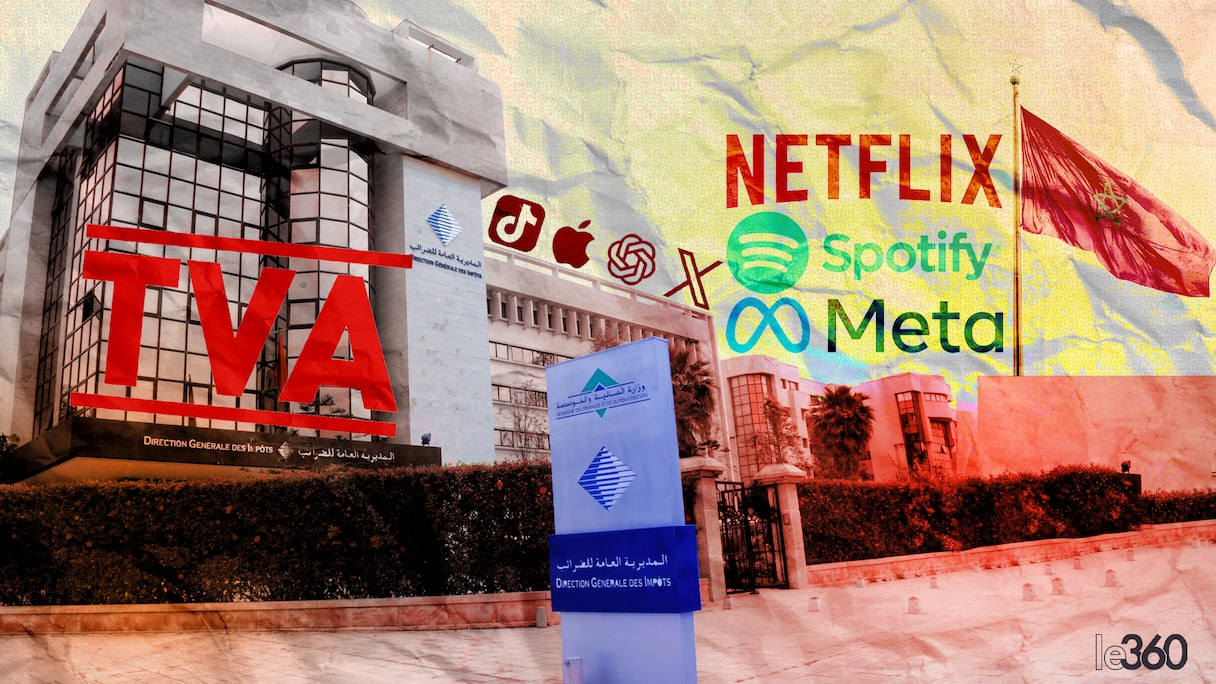
The change is now becoming visible on the bills and transactions of Moroccan users. TikTok says it is registered for VAT in Morocco and specifies that it applies 20% VAT to Moroccan customers who do not provide a valid ICE number.
Apple announced on August 27 that the 20% VAT introduced in Morocco was now being reflected in revenue from eligible apps and in app purchases, specifying that Apple collects and remits the taxes applicable in Morocco.
Google also says it is responsible for determining, charging and remitting VAT on paid apps and in app purchases made by Moroccan customers.
At OpenAI, Morocco’s 20% VAT has been collected since August 1 on taxable services provided to customers based in Morocco who are not subject to VAT. Spotify also now includes VAT in the prices of certain subscriptions offered to Moroccan users.
The taxation of digital services is not a new tax created specifically for foreign platforms. VAT was already due. What is changing is the mechanism that allows the tax authorities to collect it directly from nonresident service providers.
To understand this reform, it is first necessary to look at how VAT itself works. It is a consumption tax based on the principle that a product or service should be taxed in the country where it is consumed.
When a Moroccan consumer buys a product abroad and imports it into Morocco, VAT is paid upon importation. Conversely, when a Moroccan company exports a product or service, it does not charge Moroccan VAT. Taxation falls under the jurisdiction of the country of consumption.
The issue becomes much more complex when the transaction involves not a physical good but a digital service.
A computer bought abroad crosses a border. There is therefore a physical point of entry where the tax authorities can collect the tax. But what happens when a Moroccan consumer buys a subscription from an American platform, listens to music on a foreign platform, watches a series on a streaming service or purchases an application from their phone?
A provider can sell directly to Moroccan consumers without having a subsidiary, branch or even a physical presence in Morocco. It is precisely this dematerialized nature that has long made taxation difficult.
Read also : Netflix subscribers in Morocco see new VAT reflected in subscription bills
Morocco began addressing this issue under the 2024 Finance Law by changing VAT territoriality rules to adapt them to digital services. The approach adopted is based on the consumer’s usual place of residence.
The system was subsequently clarified by Decree No. 2.25.862, while the DGI launched an online service in May 2026 for foreign providers of digital services, with procedures opening on June 11, 2026. It was within this framework that the system began producing its first concrete effects on billing from July 2026.
In other words, when a digital service is consumed by a person whose usual place of residence is in Morocco, the service is considered to have been consumed in Morocco, even if the provider is based abroad and even if the consumer accesses the service from somewhere else.
The reform therefore resolves a first question: in which country should VAT be paid? The answer is Morocco when the service is deemed to have been consumed there.
But a second difficulty remained: who would actually collect and remit this VAT when the provider has no physical presence in the country? This is where the new system comes in.
For a foreign company with no establishment in Morocco, the tax authorities could not use the traditional control and collection mechanisms they would apply to a company established in the country.
Before the new system was introduced, platforms could therefore provide their services directly to Moroccan consumers, while the DGI had no equally straightforward mechanism for identifying these operators, requiring them to register, declare their transactions and collect the corresponding VAT.
Two categories of customers, two mechanisms
Major platforms essentially have two broad categories of customers: businesses and individuals.
For Moroccan companies subject to VAT, the mechanism already largely existed through the reverse charge system.
Take the example of a Moroccan bank purchasing advertising services from Google or another foreign platform. The platform can invoice the service without Moroccan VAT. The Moroccan company then applies the VAT itself and remits it to the DGI under the reverse charge rules.
In this arrangement, the tax authorities have a point of contact established in Morocco, namely the customer company.
The situation is very different when a Moroccan individual directly subscribes to a digital service provided by a foreign company.
A consumer obviously cannot act as a VAT registered business required to apply the reverse charge on every Netflix, Spotify or other digital service subscription. The collection mechanism therefore had to be shifted to the foreign service provider itself. This is one of the system’s main innovations.
Read also : Netflix, Google, Meta, Airbnb… Morocco’s new VAT rules face the test of implementation
Through international cooperation, particularly with the OECD and the IMF, the DGI was able to set up a platform allowing nonresident digital service providers to register and fulfill their tax obligations remotely.
The aim was to offer major platforms an environment they are already familiar with in other countries. A foreign provider therefore does not necessarily need to establish a subsidiary in Morocco or use a local structure to meet its VAT obligations. It can register online, declare the relevant transactions and pay the tax, including in foreign currency, from its headquarters abroad. According to our information, around 30 platforms are covered by the system.
The system was prepared ahead of its entry into force, with discussions and meetings held with major international platforms. Training sessions and technical work were also carried out to adapt the system to Moroccan tax rules. The system began producing its first effects in summer 2026. Announcements published by major platforms in recent weeks show that it is now operational.
Who actually pays?
The principle remains the same as with any VAT. Ultimately, the consumer bears the tax. But this does not automatically mean that every platform will increase its prices by 20%. It all depends on its pricing policy and how it incorporates the tax into its prices. A platform may decide to keep its tax inclusive price unchanged by absorbing all or part of the tax. Another may add it to the price paid by the consumer.
VAT therefore appears as a tax component of the transaction, but its final impact on the price depends on each platform’s pricing policy. For Moroccan consumers, the most visible change is therefore the appearance of VAT on the bill or receipt when applicable.
For the DGI, the immediate objective is not presented as an operation aimed at suddenly creating a massive new source of revenue. The main issue is first and foremost the broadening of the tax base.
Services consumed in Morocco now generate VAT that can be identified, declared and collected through a mechanism adapted to the reality of international digital companies. Unlike traditional taxes, these revenues can also be paid in foreign currency by companies based abroad.
Since the first concrete applications of the system, visible from July onward, the first VAT receipts from digital services have begun to materialize. The mechanism thus makes it possible to capture revenue that had previously partly escaped the tax authorities’ radar, while also generating foreign currency flows.
At this stage, it is still too early to precisely measure the impact of the measure on state revenues and the country’s external assets. Since the system is recent, several months will be needed to obtain sufficient perspective and assess the actual scale of these new tax revenues and the foreign currency flows they generate.
How can compliance with the system be monitored?
One question nevertheless remains. How can the authorities ensure that digital platforms are actually complying with their tax obligations when they do not necessarily have a physical presence in Morocco?
One of the main levers available to the tax authorities is, paradoxically, the platforms’ brand image. These companies attach considerable importance to it. They are particularly attentive to their reputation, regulatory compliance and relations with the authorities in the countries where they operate.
A previous case illustrates this logic of cooperation between the tax authorities and international platforms. Several years ago, an international online booking platform that had expanded its activities into car rentals began offering its customers vehicles directly at the airport. Its business model involved renting the cars itself from a specialized provider before offering them to its own customers.
Since car rentals in Morocco are subject to VAT, the tax treatment of this new activity quickly became an issue. For hotel room bookings, VAT was handled through a reverse charge by the hotel, which withheld the tax before remitting it to the tax authorities. But once the platform began renting vehicles directly to individuals, this mechanism could no longer apply in the same way. Although it had no physical presence in Morocco, the platform itself contacted the General Directorate of Taxes, through an accountant, to clarify its tax status.
Read also : Morocco begins enforcing VAT on Netflix, ChatGPT and other foreign digital services
The platform was therefore required to pay VAT on its transactions, but it could also benefit from the right to deduct VAT because it had itself incurred VAT when renting the vehicles from its service provider. The tax authorities consequently recognized its right to deduct VAT for the previous four years.
This example shows that the relationship between the tax authorities and major digital platforms does not rely solely on traditional control and collection mechanisms. It also rests on their reputation.
For major digital players, tax compliance is therefore becoming a key aspect of their presence in the Moroccan market. A new step has thus been taken in the taxation of the digital economy. Even without a physical presence, Web giants are now entering the Moroccan tax authorities’ field of vision. This should gradually reduce the grey areas created by the dematerialization of transactions and better adapt taxation to this new economic reality.
