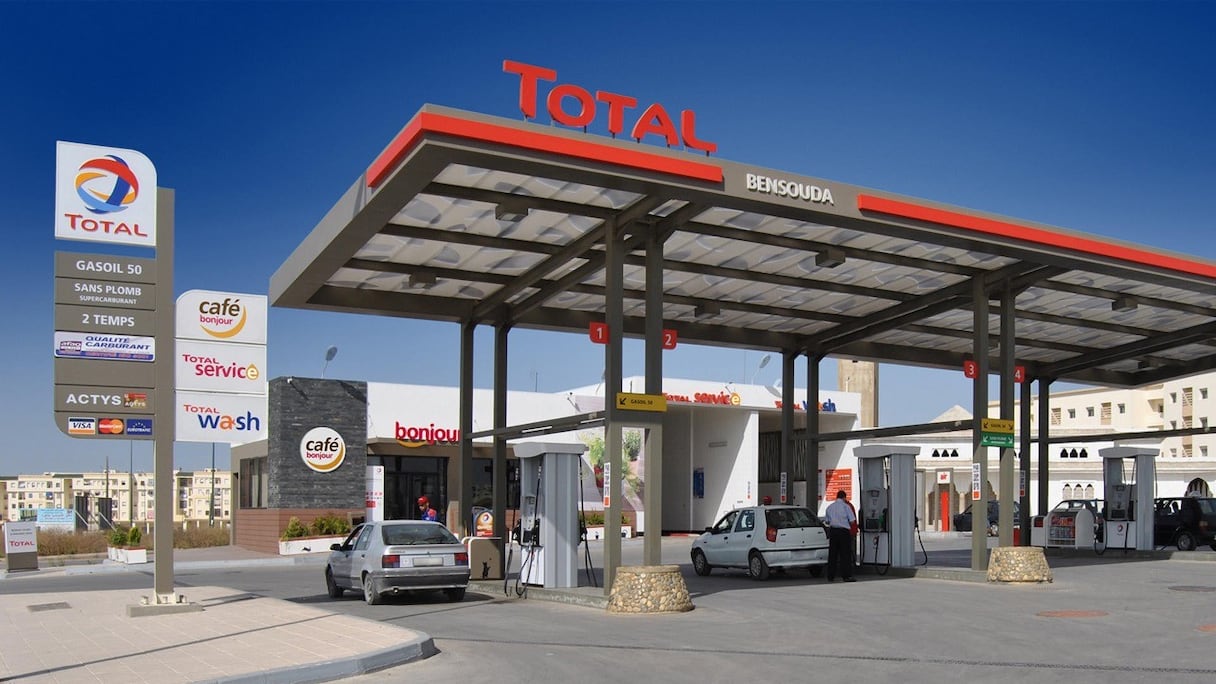
Opening a new service station will follow a more tightly defined process from Aug. 31, with fixed deadlines for authorities and investors, clearer rules on location and new provisions encouraging renewable energy from the design stage.
A circular issued by the Ministry of Energy Transition and Sustainable Development lays out the procedure from the initial application through construction and final commissioning.
The changes do not remove the requirement for prior authorization from the government authority responsible for energy. Instead, they seek to standardize how applications are submitted, assessed and inspected, and how projects eventually receive clearance to begin operating.
Applications should preferably be filed through the ministry’s electronic platform. Developers will still be able to submit them by registered mail with acknowledgement of receipt or physically against a receipt.
15 days, 30 days: Approval process gets a timetable
One of the main changes is the introduction of specific deadlines at each stage.
If an application is inadmissible, the applicant must be notified within 15 days and informed of the missing information or documents.
For an admissible application requiring additional information, the ministry has up to 15 days to request it. The developer then gets 30 days to provide the documents.
Once the file is complete, the Energy Transition Department has a maximum of 30 days to rule on the application.
Site inspections are also subject to a timetable. Inspectors must assess the suitability of the proposed location and identify nearby service stations, recording their brands, distance from the proposed site and, where applicable, average monthly sales. The inspection report must be submitted within five days.
The 500-metre and 20-km rules
The circular does not change existing regulatory distances between service stations. It does, however, establish a uniform method for measuring them.
In urban areas, a proposed station must be at least 500 meters from an existing service station or filling center.
Outside urban areas, the project must generally be at least 20 kilometers from a station or filling center operating under the same brand. A minimum distance of two kilometers also applies in relation to the nearest station in a cluster.
Crucially, those distances are to be measured along public roads rather than simply between two points.
In cities, the calculation is made between the midpoint of the proposed station’s frontage and that of the nearest existing station. Both possible directions of travel must be assessed, with the shorter distance retained.
Outside urban areas, the same principle applies in relation to the nearest existing station carrying the same brand.
Measurements must reflect actual traffic rules, including road signs and permitted directions of travel. Where there is uncertainty, regional or provincial services must consult the relevant authorities to determine the distance under normal traffic conditions.
The clarification is intended to remove ambiguity in a criterion that can determine whether a proposed site qualifies for authorization.
Solar panels and renewable power enter the equation
New stations will also be encouraged to consider renewable energy before construction begins.
Developers are being urged to examine whether part or all of a station’s electricity requirements could be supplied through renewable sources, either through self-generation or by purchasing renewable electricity.
Projects incorporating self-generation, a renewable energy integration study, a renewable electricity purchase agreement or other measures aimed at reducing energy costs will be referred to a joint unit representing the departments responsible for fuels and renewable energy.
The assessment may include the use of rooftops, parking areas and canopies for photovoltaic panels.
The provision stops short of making renewable power mandatory, but formally introduces it into the planning process for new service stations.
Build within 24 months or lose the authorization
Receiving approval does not give a developer an unlimited period to complete a project.
Construction cannot begin before authorization to create the station has been issued, and that authorization becomes void if the facility is not commissioned within 24 months.
Regional and provincial departments will be responsible for monitoring the deadline and issuing notices and reminders as it approaches.
Delays attributable to public administrations or agencies can be formally reported when duly justified, although doing so does not automatically extend the 24-month deadline.
Nor does authorization to build automatically allow a station to start selling fuel.
Before opening, the completed facility must undergo a compliance inspection to establish whether it corresponds to the authorization, approved plans and applicable technical and safety standards.
Commissioning applications should again preferably be filed electronically. If additional documents are required, the operator has 30 days to submit them.
Once the application is complete, the competent regional or provincial department has up to 15 days to review it before an on-site inspection is conducted.
Any shortcomings identified during the inspection must be corrected and verified before operations can begin. A station can open only after the relevant regional or provincial director issues a compliance certificate.
Network grows by more than 200 stations in a year
The new framework arrives as the service station network continues to expand.
Competition Council figures show 3,742 service stations operating nationwide at the end of 2025, compared with 3,534 a year earlier — an increase of 208 outlets in 12 months.
From Aug. 31, the new procedure will govern applications for additional stations as well as requests to commission completed projects.
