There was no reprieve for the United States’ main trading partners, which had hoped for the expiration of the global tariff imposed by the Trump administration on Feb. 24, 2026, under Section 122 of the Trade Act of 1974. That measure expired last Friday.
On the eve of its expiration, the White House announced new tariffs targeting countries accused of “failing to effectively establish and enforce a prohibition on the importation of goods produced with forced labor,” again relying on the Trade Act of 1974. According to the White House, the law provides stronger safeguards against potential legal challenges.
The new surcharges, which replace the previous temporary tariffs, apply to 60 countries, including the United States’ main trading partners: European Union member states, China, Japan, Australia, Canada, Brazil, Mexico, and the United Kingdom.
The new tariffs, which took effect on Friday, July 24, are set at two levels: 10% and 12.5%. The two-tier structure is based on what has become a central criterion for President Donald Trump: “combating forced labor.”
Read also : US announces civilian nuclear deal with Saudi Arabia
Countries that have anti-forced labor legislation but, according to Washington, do not enforce it effectively, including European Union member states, are subject to a 10% surcharge. Countries without such legislation face a 12.5% tariff. These surcharges replace the 10% tariffs imposed in February 2026, which expired last Friday after the legal maximum duration of 150 days.
In total, 17 countries are subject to the 10% surcharge, mainly European Union member states, while another 43 countries, including China, Japan, Switzerland, and Australia, face the 12.5% tariff.
The 60 countries covered by the new tariffs account for 99.4% of U.S. imports. The measure took effect at 12:01 a.m. U.S. time on Friday, July 24. However, goods already in transit to the United States will not be affected if they arrive before 12:01 a.m. Tuesday, July 28.
“The United States has maintained a ban on imports of products made with forced labor for nearly a century and has rigorously enforced it. It is time for our trading partners to do the same,” said Jamieson Greer, the U.S. Trade Representative.
Read also : US to limit stays of students, journalists
The United States said it conducted an investigation into the forced labor policies of 60 economies before introducing the new tariffs. According to Washington, its major trading partners should align more closely with U.S. legislation to prevent differences in regulatory frameworks from creating unfair competition for American companies.
Following what the United States described as a rapid investigation, its conclusions were unequivocal.
“The United States is the only country in the world that has effectively adopted and enforced a ban on imports produced with forced labor,” the U.S. Trade Representative said.
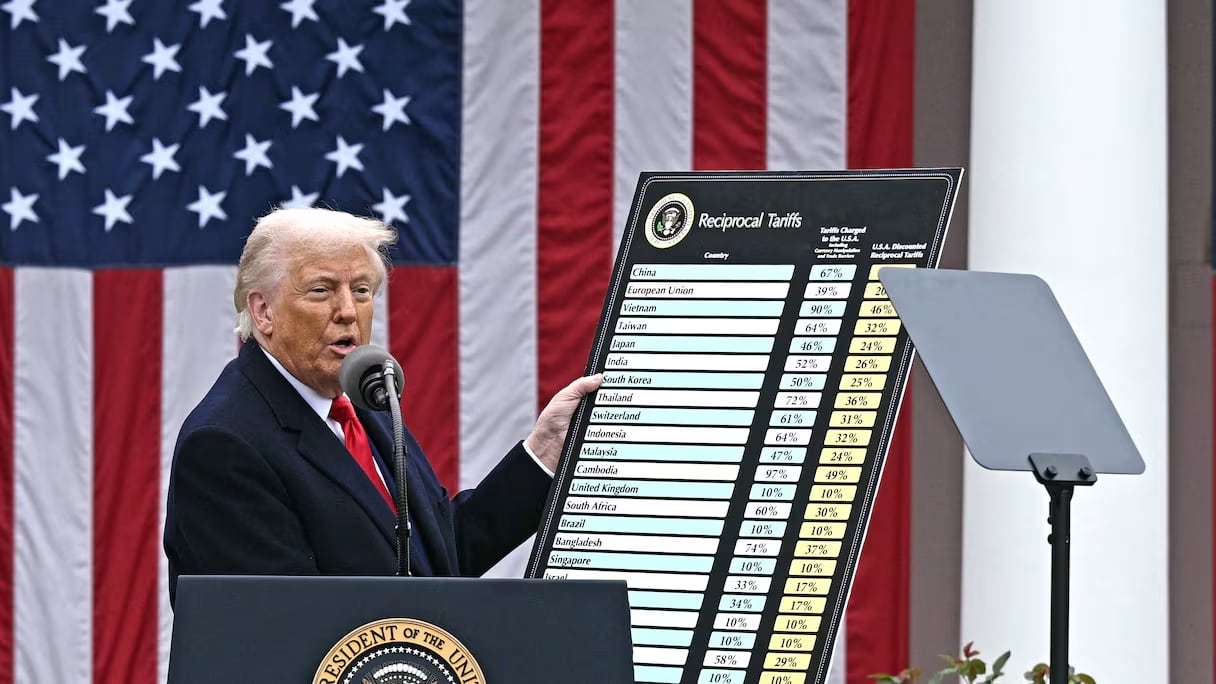
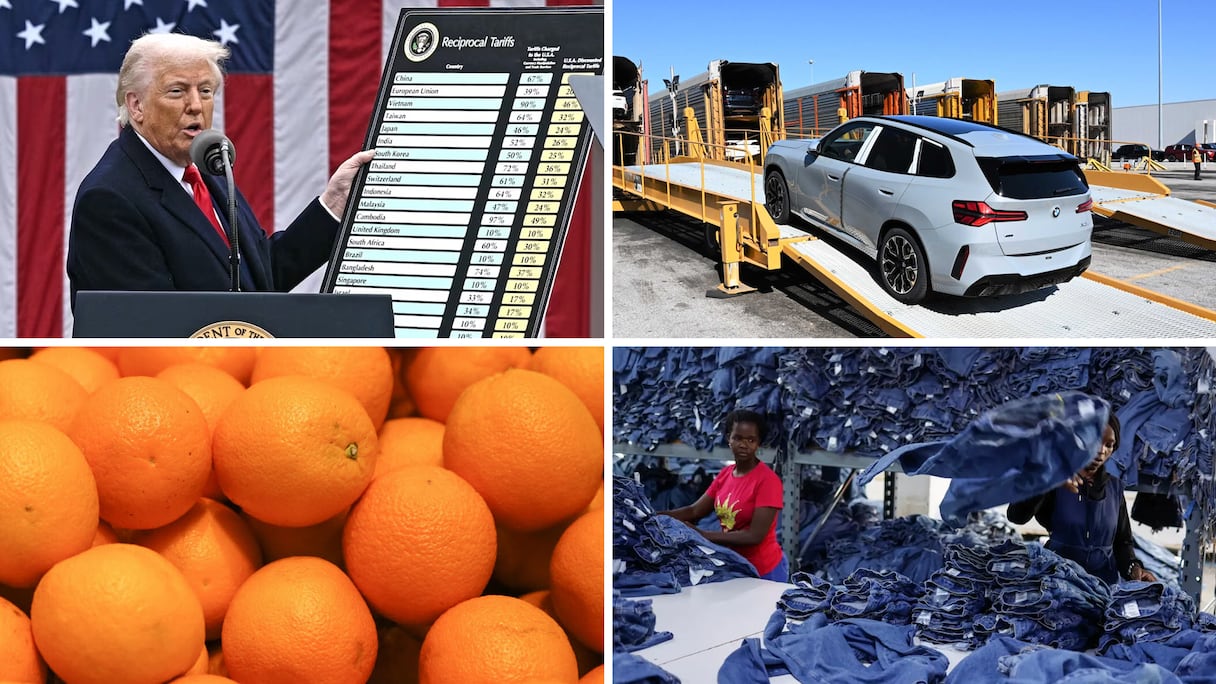
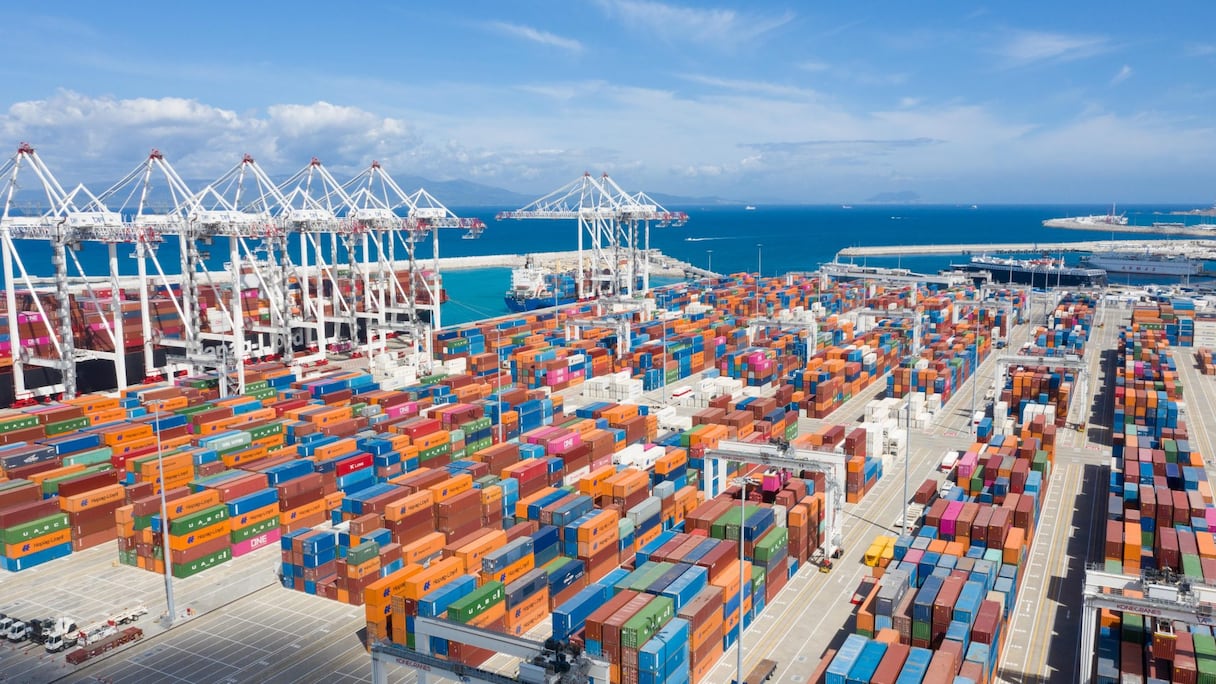
Donald Trump's new tariff surcharges affect 60 countries, including seven in Africa, under what Washington says is an effort to combat forced labor.
For the countries affected by the new tariffs, however, the measure is simply another pretext for imposing duties on the United States’ main trading partners and continuing the trade dispute between the United States and those partners.
Among the 60 countries subject to the new surcharges are seven African nations: South Africa, Algeria, Angola, Egypt, Libya, Morocco, and Nigeria.
These are primarily the continent’s largest economic and oil-producing powers, as well as the United States’ main trading partners in Africa. All are subject to the new 12.5% surcharge on the grounds that they do not have anti-forced labor legislation.
Read also : Trump suspends tariffs on Moroccan phosphate fertilizers
South Africa responded by saying it has robust legislation prohibiting forced labor, has ratified the core conventions of the International Labour Organization (ILO), and has enforcement mechanisms in place to prevent goods produced through forced labor from entering supply chains. However, that was not enough to convince U.S. authorities.
One thing is certain: these countries are far from being those with the weakest records on forced labor legislation. Several African countries criticized by non-governmental organizations do not appear on the list. It should also be noted that not all products exported by these countries are affected by the new tariffs. Energy and raw materials that are not produced in the United States are exempt. As a result, the impact of these surcharges on African countries is expected to be limited.
Read also : Oil prices surge more than 5% after Trump says Iran ceasefire is over
Through these exemptions, the United States seeks to ensure access to natural resources, including hydrocarbons, minerals, and fertilizers, at prices that allow American companies to remain competitive. This helps explain why several African mineral exporters, such as the Democratic Republic of the Congo and Zambia, are not included.
However, in March 2026, the United States included seven African countries in a global forced labor investigation: Cameroon, Côte d’Ivoire, the Democratic Republic of the Congo, Ethiopia, Ghana, Guinea, and Mali. The investigation was intended to examine sectors and supply chains suspected of relying on forced labor.
