Inflation has remained moderate in Morocco and is expected to stay at low levels through the end of the year. The lull is likely to be temporary, however, with prices expected to begin rising again in 2027.
According to the High Commission for Planning (HCP), consumer prices rose by an average of just 0.3% during the first eight months of 2026. The slowdown was mainly driven by lower prices for some food products, which weighed on the overall consumer price index throughout the period.
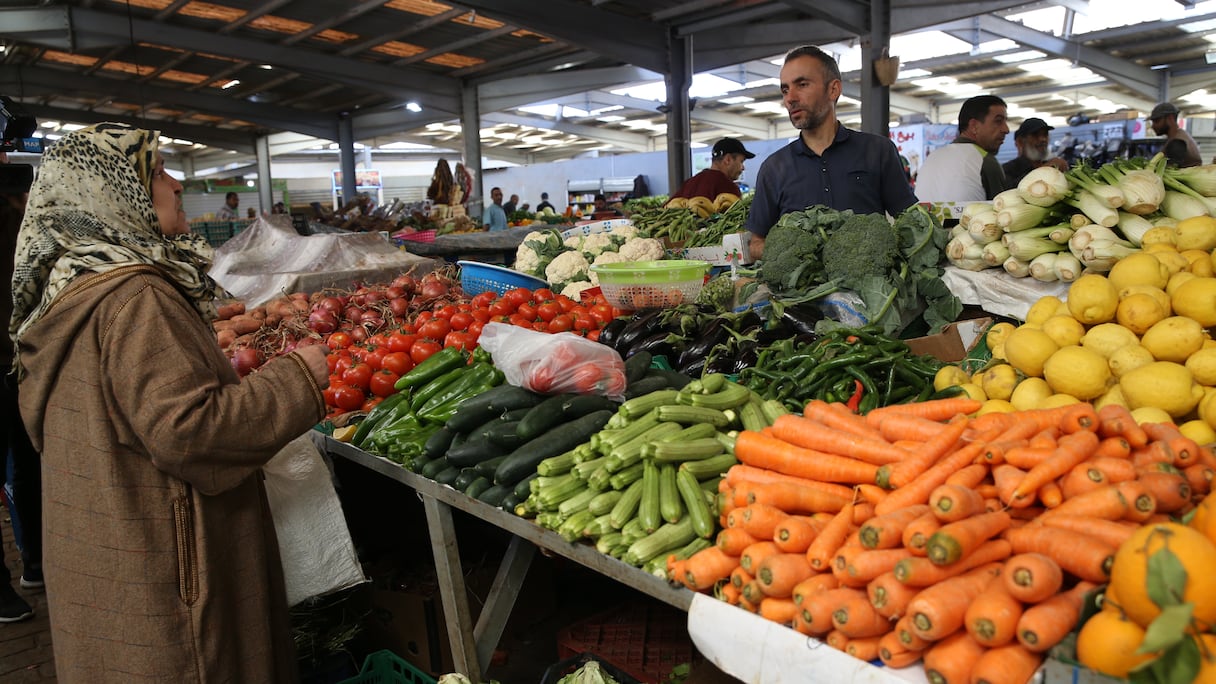
BMI/Fitch Solutions data point to a sharp reversal in food-price trends. Food inflation fell from 2% year-on-year in the first half of 2025 to deflation of 1% in the first half of 2026.
Read also : Morocco’s inflation rate is low, so why does life still feel so expensive?
Food accounts for more than 38% of the average Moroccan household consumption basket, giving changes in food prices a significant impact on overall inflation. BMI/Fitch Solutions expects inflation to average 0.7% for the full year in 2026.
Bank Al-Maghrib nevertheless expects inflation to accelerate in 2027, reaching 1.5%. The increase is expected to be driven mainly by core inflation, which excludes volatile prices and regulated tariffs.
Core inflation is forecast to rise from -0.2% this year to 2.2% in 2027. Bank Al-Maghrib attributes the increase to two main factors: the fading impact of the decline in food prices, particularly olive oil prices, and the persistence of relatively high imported inflation.
BMI/Fitch Solutions shares this outlook, noting that the effect of favorable cereal harvests, which helped drive food prices lower from the start of the year, is expected to begin fading in the fourth quarter of 2026.
The research firm identifies exchange-rate movements and weather conditions among the main risks that could push inflation away from its current trajectory.
Morocco is among the economies where a weaker-than-expected currency could add to inflationary pressures, BMI/Fitch Solutions said, pointing to the country’s more flexible exchange-rate regime compared with economies whose currencies are pegged to the dollar.
The firm also warned that Morocco could face lower domestic agricultural output if weather conditions deteriorate in 2027. This represents a separate risk from broader movements in global food prices.
Morocco remains dependent on food imports, BMI/Fitch Solutions noted. A renewed rise in global food prices, potentially linked to El Niño, could push inflation above current forecasts.
An escalation of the Russia-Ukraine conflict could also disrupt grain supplies from the Black Sea, creating an additional risk for food-importing countries such as Morocco.
Bank Al-Maghrib rates expected to remain unchanged through 2027
Despite the expected acceleration in inflation, BMI/Fitch Solutions forecasts that Bank Al-Maghrib will keep its policy rates unchanged through the end of 2027.
Inflation is expected to remain below 2%, leaving, in the research firm’s assessment, limited pressure for the central bank to tighten monetary policy.
Read also : Diesel heads above DH16 as fuel prices climb again at midnight
The forecast is based partly on Bank Al-Maghrib’s past tightening cycles. Since 1995, when the historical data used by BMI/Fitch Solutions begins, the central bank has entered only two rate-hiking cycles, in 2008-2009 and 2022-2024.
In those two episodes, inflation in the preceding quarter averaged 4.4% and 8.3%, respectively.
The inflation rates currently forecast by Bank Al-Maghrib, at 0.7% for 2026 and 1.5% for 2027, remain well below those historical levels. BMI/Fitch Solutions therefore expects the central bank to maintain its current policy rate for an extended period.
