Artificial intelligence, digital content creation and navigation sciences are among the new specializations introduced by Mohammed First University in Oujda. The new programs aim to bring academic training closer to labor market needs and development projects in the Oriental region.
New facilities and programs are being launched in rapidly changing fields. The university is expanding students’ options while adapting its academic offering to economic and technological changes.
The university welcomed nearly 18,000 new students at the start of the academic year. It now has around 78,000 students enrolled across more than 280 programs. “This year, the start of the academic year has been an outstanding success,” said Yassine Zaghloul, president of Mohammed First University.
From nine to 18 university institutions
In just a few years, the university has nearly doubled its network, expanding from nine to 18 institutions. Located in Oujda, Nador, Berkane and Taourirt, they offer a wider range of programs and bring higher education closer to students across the region.
“These new programs meet the needs of the region, but also those of the country. They also support the major projects launched in the region,” Zaghloul said.
In Berkane, the university has expanded its academic offering with the creation of a Faculty of Humanities and Social Sciences, covering philosophy, sociology, anthropology and psychology. The city is also home to a facility specializing in food-processing industries and biotechnology.
In Taourirt, the university has opened a Faculty of Science and Technology offering programs in petrochemicals, digitalization and artificial intelligence. A Faculty of Economics and Management has also been established.
In Nador, the multidisciplinary faculty has been reorganized to create autonomous institutions. The city also has a facility dedicated to mechanical engineering and navigation sciences. In Oujda, a new institution focuses on sports sciences.
Digital skills at the heart of new programs
The university is also updating its curricula to keep pace with changing professional demands, with artificial intelligence and digital content creation taking on a growing role.
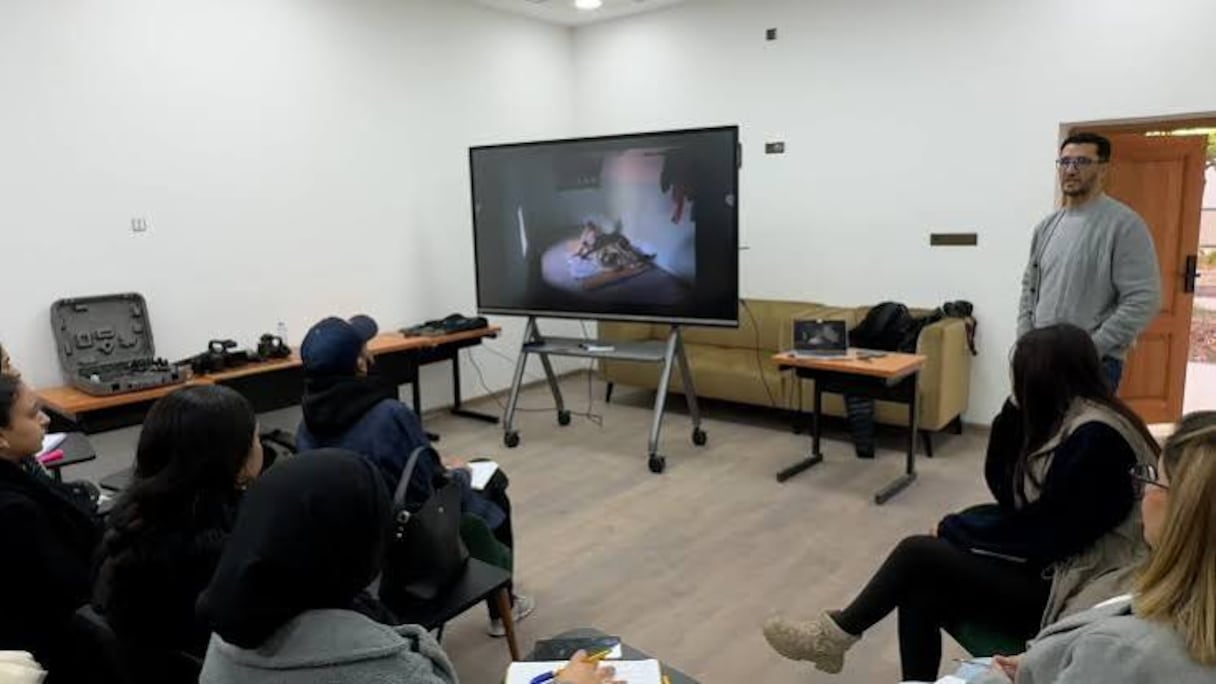
At the Faculty of Letters and Human and Social Sciences in Oujda, a master’s program in media, communication and digital content creation has been launched. It aims to train students to produce content for digital platforms and master new communication tools.
Hicham Qazzout, the program’s coordinator and a researcher in media and strategic communication, said the course responds to changing digital practices and the growing use of artificial intelligence applications among young people.
“This is a new academic program that focuses on adapting to the digital and social transformations taking place in our country, particularly the technological revolution and the challenges associated with artificial intelligence,” he said.
Read also : Four new university hospitals, 1,600 health centers: Government sets out health reforms
The master’s program aims to equip students with skills they can use in their professional careers.
Digital platforms and artificial intelligence applications are already part of students’ daily lives. The aim is to help them move beyond simply using these tools and learn to apply them in their work.
Research as another driver of development
The expansion of academic programs is accompanied by a research component. Mohammed First University has around 70 laboratories working in fields including healthcare, agriculture, water security, food security and energy.
Research is also being conducted in technological and industrial sectors, including the automotive industry and 3D printing. Patents have been filed in agriculture, renewable energy and water resource management.
For the university’s president, the challenge now is to make use of these results and turn them into practical applications. This will require stronger partnerships with the region’s economic stakeholders.
The goal is to bring researchers’ work closer to companies’ needs and development projects. The university aims to strengthen its role in innovation and economic development across the Oriental region.
