Motorized two-wheelers are playing an increasingly important role in mobility in Morocco, serving both as an affordable means of transportation and as a work tool, particularly in delivery services. This growth, however, also means greater exposure to serious accidents. According to provisional 2025 statistics cited by NARSA, 1,983 two-wheeler drivers and passengers were killed on Morocco’s roads that year, making this category the most affected by road fatalities.
Moroccan law requires both drivers and passengers to wear helmets. Helmets must be approved, properly fitted and securely fastened. NARSA notes that a properly fitted helmet with the chin strap fastened reduces the risk of death in a motorcycle crash by more than sixfold and cuts the risk of brain injuries by up to 74%, with head trauma remaining the leading cause of death among two-wheeler users.
On the ground, however, several practices continue to undermine the effectiveness of helmet use, including improperly fastened chin straps, unapproved helmets, passengers without helmets and removing a helmet after passing a checkpoint. For NARSA, the challenge is no longer simply compliance with the legal requirement, but building a culture of prevention that makes helmet use automatic, even on short trips.
Speed: a few minutes saved can mean a much greater risk
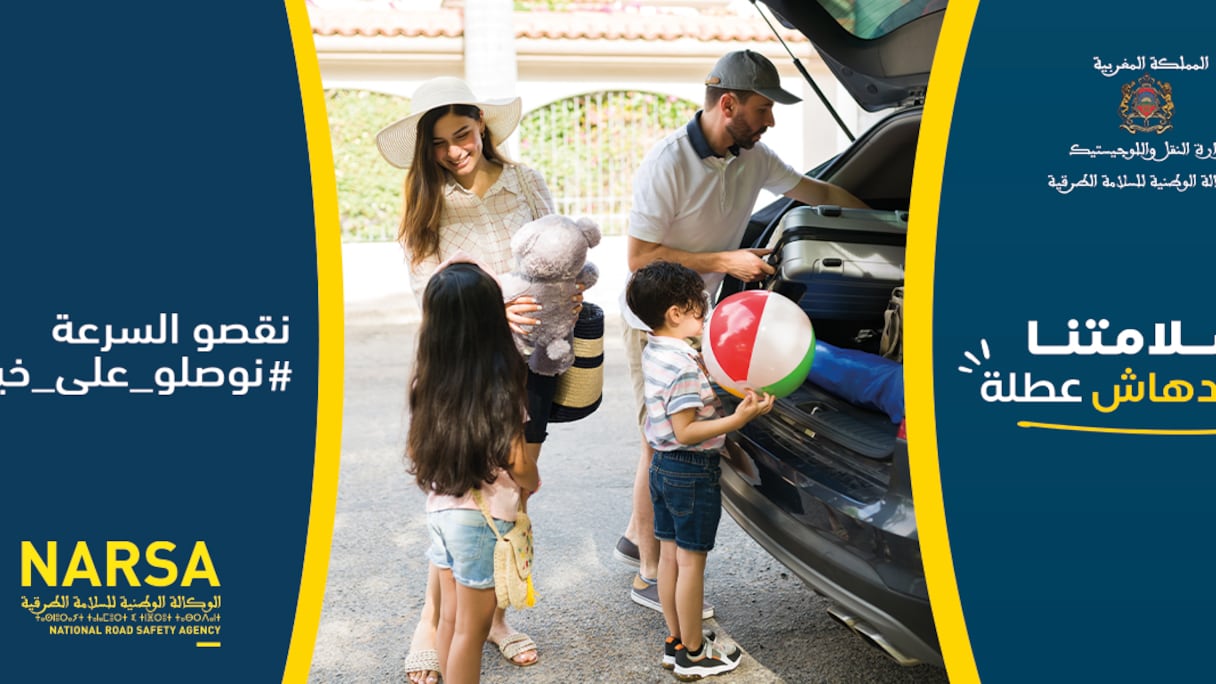
Summer also brings more temptation to speed in an effort to reach destinations sooner. According to NARSA, speeding saves only a marginal amount of time, generally just a few minutes over a journey, while significantly increasing both the risk of an accident and the severity of its consequences.

NARSA notes that at 120 km/h, a vehicle travels about 33 meters every second, compared with nearly 39 meters at 140 km/h. A brief moment of inattention can therefore mean traveling several dozen meters before braking even begins. The faster the vehicle is traveling, the longer the stopping distance, a risk that is compounded by wet roads or reduced visibility.
In response, NARSA recommends planning trips in advance, leaving enough time to avoid stress, maintaining a safe following distance, avoiding phone use while driving and taking regular breaks on long journeys. The agency sums up the approach simply: the goal is not to arrive quickly, but to arrive safely and return home safely.
While vacationers generally focus on organizing their trips and packing their bags, vehicle checks are more easily overlooked. NARSA nevertheless considers mechanical inspections a preventive measure in their own right, alongside compliance with speed limits.
Read also : As delivery motorcycles multiply, Morocco turns to rider identification to improve road safety
The agency recommends checking, above all, the braking system and tires, including tire pressure, wear and any cracks. These components are particularly heavily used during long journeys and in hot weather. Fluid levels, including engine oil, coolant, brake fluid and windshield washer fluid, as well as the condition of the battery, should also be checked.
NARSA also stresses the importance of mandatory safety equipment and systems, including lights, windshield wipers, clean windows and mirrors, a spare tire or repair kit, a warning triangle, a reflective vest and a fire extinguisher. During periods of extreme heat, a properly functioning air-conditioning system is also considered a safety factor, as excessive temperatures inside the vehicle can contribute to fatigue and reduce the driver’s concentration. Regular roadworthiness inspections remain, according to the agency, the most reliable way to detect problems that may not be visible to the naked eye before they become dangerous on the road.
Wearing a helmet properly, controlling speed and checking the vehicle beforehand: these three precautions, highlighted by NARSA ahead of each summer season, form the basis of a prevention approach that relies less on regulatory requirements and more on developing lasting road-safety habits.
