In Kinigi, northern Rwanda, mountain gorillas are never far away. But for communities living on the doorstep of Volcanoes National Park, protecting one of the world’s most celebrated primates must coexist with another imperative—making a living from increasingly constrained farmland.
Rwanda is seeking to reconcile the two by turning tourism generated by its national parks into a direct source of income and development for neighboring communities.
Through its Tourism Revenue Sharing Programme, the country reinvests 10% of national park revenues in projects benefiting local populations. Introduced in 2005 with an initial allocation of 5%, the share was doubled to 10% in 2017.
The money has since funded agriculture, infrastructure, healthcare and education projects, as well as initiatives designed to reduce conflicts between people and wildlife.
According to Jean Guy Afrika, director general of the Rwanda Development Board, around 18 billion Rwandan francs have been invested in community development over the past two decades.
Rwanda generated about $650 million in tourism revenue in 2024, according to figures cited by Afrika. That figure rose to $685 million in 2025.
Growing more with less land
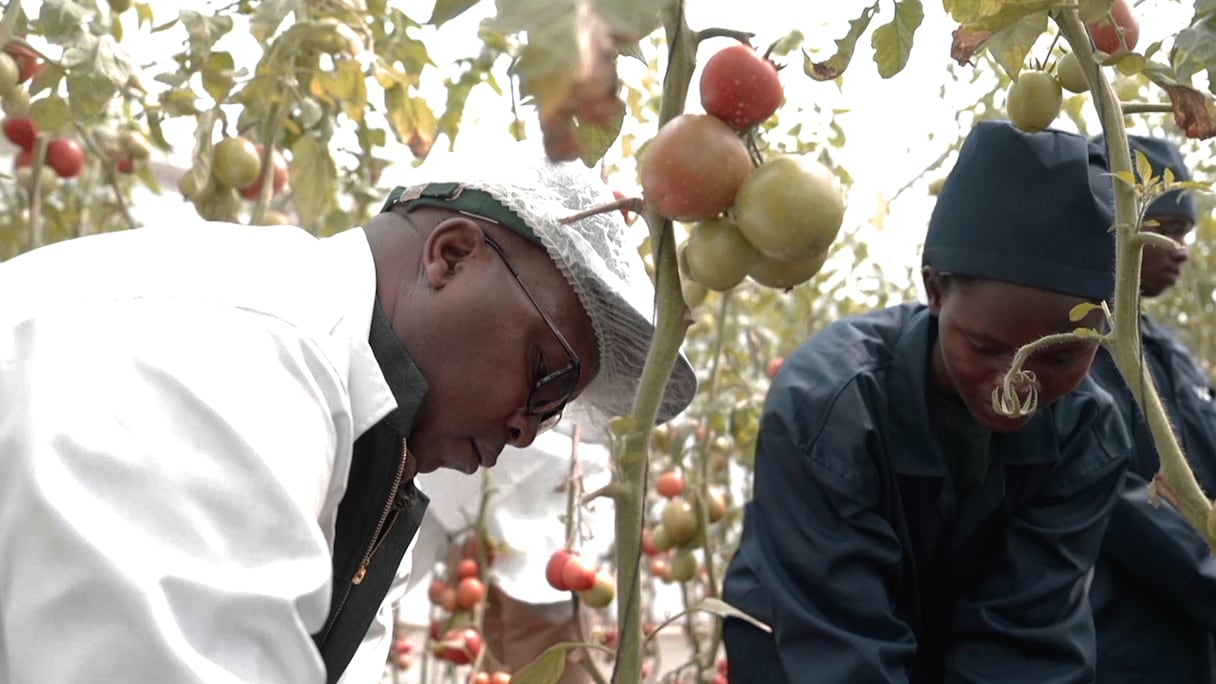
In Kinigi, one of the most tangible examples of the policy can be found inside greenhouses.
Farmers are growing tomatoes using modern agricultural techniques intended to produce higher yields from relatively small plots — an important consideration in an area where pressure on available land is particularly acute.
“The soil is fertile, but the plots are not large,” Agriculture Minister Télesphore Ndabamenye said. “So we thought we needed to make good use of it through technology in order to maximize yields.”
On just 450 square meters, farmers can expect to harvest as much as nine tons of tomatoes.
The idea is to demonstrate that technology and more intensive use of agricultural land can help families increase their incomes without requiring larger plots.
That question is becoming even more pressing as Rwanda prepares to expand Volcanoes National Park.
The planned project would add about 3,740 hectares to the park, increasing its current area by 23% and providing additional habitat for mountain gorillas. The expansion is expected to cost around $230 million over 10 to 15 years.
But creating more room for the gorillas also means relocating people currently living on land earmarked for incorporation into the park.
A new village for 510 families
A 50-hectare “Smart Green Village” planned in Kinigi is expected to accommodate 510 families affected by the relocation.
Plans include solar-powered homes and water recycling systems alongside modern agriculture, livestock farming and community-based tourism activities.
For residents, relocation represents a major disruption. But it could also provide an answer to a longstanding problem for farmers living close to the park — wildlife destroying their crops.
Colette Nyirambonigaba experienced the problem firsthand.
In 2024, she planted potatoes on a 1,000-square-meter plot and expected to harvest around two tons. Buffaloes destroyed much of the crop, leaving her with just 200 kilograms.
The experience convinced her of the potential benefits of moving to an area where farming can be better protected and organized. The crucial question, however, is whether the new economic activities will allow relocated families to maintain or improve their incomes.
The Kinigi horticultural project could eventually go beyond growing vegetables.
Afrika said authorities are considering expanding tomato production and developing processing activities, including tomato puree production. The objective is to retain more value locally instead of relying solely on the sale of unprocessed agricultural produce.
“We want to add more value to what we produce so that people in our rural areas can strengthen their skills, earn more and, overall, improve their living conditions,” Afrika said.
Making conservation pay for communities
The approach forms part of Rwanda’s broader attempt to make communities active stakeholders in conservation by ensuring that people living around protected areas receive tangible economic benefits from tourism.
That relationship is particularly important around Volcanoes National Park, where mountain gorillas are among the country’s most valuable tourism assets.
Through 2025, Rwanda had allocated more than 18 billion Rwandan francs to over 1,000 community projects through the Tourism Revenue Sharing Programme. Another 83 projects worth around 4 billion francs were implemented during the 2024-2025 fiscal year.
The model will be in the spotlight on Sept. 4, when Kinigi hosts the 21st edition of Kwita Izina, Rwanda’s annual baby gorilla naming ceremony.
Established in 2005, the event has developed into an international showcase for conservation, sustainable tourism and community involvement. The 2026 program will include an event dedicated to community projects financed through tourism revenue sharing.
For Kinigi, however, the challenge extends well beyond a new agricultural project or the relocation of several hundred families.
Rwanda is attempting to balance three competing demands—giving mountain gorillas more protected habitat, ensuring surrounding communities can sustain viable livelihoods and using a growing tourism industry to finance local development.
The success of that model will ultimately depend not only on the future of the gorillas, but on whether the people who live beside them can see conservation improving their own lives.
