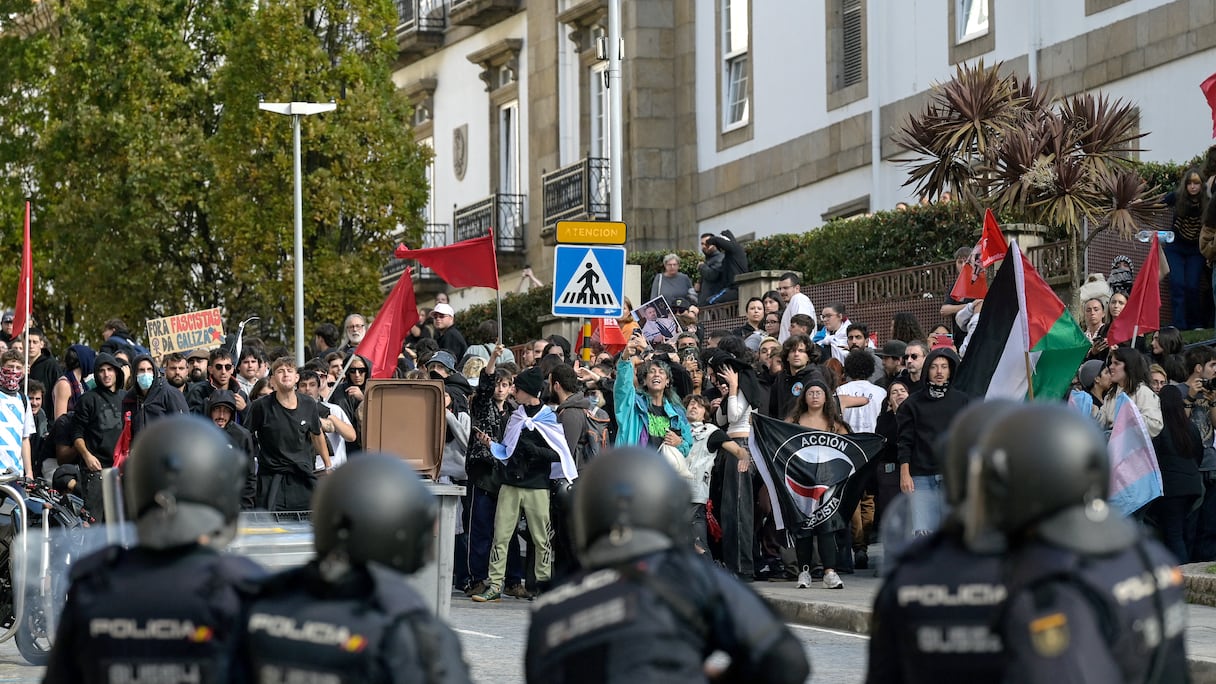
With just over a month until Spain’s November 29 general election, immigration and relations with Morocco have become major political battlegrounds. Since the events in Sebta, language used by some politicians has provoked a strong backlash from civil society groups, which accuse them of exploiting public fears and stigmatizing migrants for electoral gain.
Morocco has repeatedly condemned this political exploitation, criticizing the use of immigration and anti-migrant rhetoric as weapons in Spain’s political disputes. The current protests show that the trend is also meeting resistance within Spanish society itself, where numerous organizations are increasingly concerned about the consequences of rhetoric that fuels mistrust and hostility.
In a manifesto backed by organizations including Amnesty International, the Spanish Commission for Refugee Aid (CEAR), Oxfam Intermón, Red Acoge, No Name Kitchen, the Children’s Platform and the Federation of Journalists’ Unions, the signatories condemn the language used by certain authorities to describe the events in Sebta in July.
They denounce expressions they describe as “stigmatizing, dehumanizing, and degrading, even bellicose,” warning that such language risks fuelling hatred and violence against migrants while spreading fear and hostility among the wider population.
The organizations are also alarmed by the growing criminalization of humanitarian workers and opposition to taking in unaccompanied migrant children. They condemn a climate in which migrants are increasingly portrayed as a threat, with their rights and dignity sacrificed to political calculations.
The demonstrations taking place between October 22 and 27 are intended to challenge precisely this trend and defend “humanity, rights and dignity” in the face of rising racism.
Hate speech surges 76% after Sebta events
The concerns raised by civil society groups are reflected in Spain’s official figures. The Spanish Observatory on Racism and Xenophobia (OBERAXE), which operates under the Ministry of Inclusion, Social Security and Migration, identified 101,025 potentially reportable instances of hateful or discriminatory content on social media in August, up from 57,406 in July—a 76% increase.
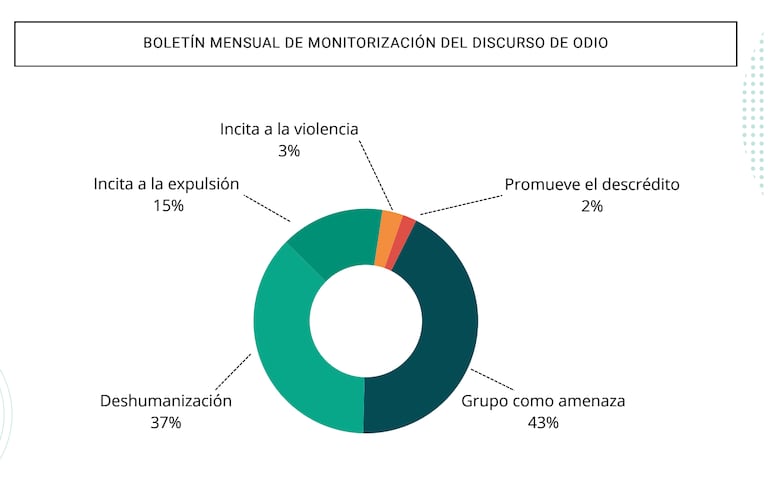
According to the report, 39% of the content analyzed in August was linked to migrant arrivals in Sebta. The rhetoric primarily targeted migrants and people of North African origin, frequently portraying them as threats to security and social cohesion.
The figures also show that 37% of the messages analyzed contained dehumanizing language, while 58% used openly aggressive language.
Some statements have been so inflammatory that Spanish authorities have referred them to prosecutors. The Equality Ministry asked the public prosecutor’s office to examine remarks by José María Figaredo, a senior figure in the far-right Vox party, who spoke of “hunting and fishing” in reference to migrants—a particularly disturbing choice of words. He also described their arrival as an “invasion.” The ministry wants prosecutors to determine whether his comments could constitute criminal incitement to hatred.
Abuses in Sebta at the heart of protests
The organizations are also drawing attention to allegations of violence and mistreatment of migrants in Sebta, as well as inadequate safeguards for the most vulnerable. They are demanding investigations into alleged abuses following the mass arrivals in late July and calling on the authorities to ensure effective protection of fundamental rights.
The manifesto describes allegations of beatings, humiliation, pursuits and degrading treatment of migrants. Its signatories insist that nobody who has reported torture, mistreatment or other abuses should be deported before having access to justice.
The organizations are also calling for complaints lodged by migrants, humanitarian groups and journalists to be investigated, and for those documenting conditions on the ground to be protected.
In recent weeks, witness accounts, videos and audio recordings have pointed to alleged assaults, humiliation and mistreatment of migrants in Sebta. Reported by Spanish media and accompanied by allegations raised by organizations including Amnesty International, the accounts have brought the conduct of security forces and military personnel deployed in the enclave under scrutiny.
For the manifesto’s signatories, the situation cannot be treated solely as a matter of security or border control. They are demanding decent reception conditions, access to healthcare, respect for the right to international protection and effective safeguards against violence.
They are also seeking stronger protection for unaccompanied migrant children, women caring for children, homeless people and asylum seekers. A person’s immigration status, they insist, cannot justify denying assistance or restricting fundamental rights. The authorities remain responsible for ensuring their safety and dignity.
Demonstrations across Spain
The first demonstrations took place on October 22 in Algeciras and Palma de Mallorca. Further rallies are planned in the coming days in Madrid, Bilbao, Granada, Logroño, Vigo, Elche and Vitoria-Gasteiz. Murcia and Valencia are also due to hold protests on October 27, while a demonstration is scheduled in A Coruña on November 8.
Through this nationwide mobilization, the organizations hope to broaden the debate beyond Sebta and challenge the normalization of xenophobic rhetoric across Spain. They argue that the fallout from July’s events extends far beyond the management of a single border, touching directly on social cohesion and the treatment of migrant communities throughout the country.
Read also : Rights violations in Ceuta: Morocco’s CNDH calls on Spanish Ombudsman to investigate
The current protests are not an isolated initiative. As early as September, numerous organizations had urged Spanish authorities to mount a more effective humanitarian response to the plight of thousands of people who remained in Sebta.
At the time, they warned of precarious reception conditions, the vulnerability of children without family support and the risks of turning immigration into a political weapon.
European migration policies also under fire
The manifesto also takes aim at Europe’s approach to migration management. For its signatories, the events in Sebta expose the shortcomings of policies built primarily around border control.
The organizations are calling for legal, safe and accessible migration routes, respect for the right to asylum and adherence to the principle of non-refoulement. They also want Spanish authorities to fully investigate the alleged abuses and put an end to any violence or harassment directed at migrants.
The manifesto therefore sets out two demands. First, an effective response to the humanitarian needs arising from the mass arrivals in July. Second, accountability from institutions for rhetoric that turns migrants into instruments of political confrontation.
The mobilization comes at a particularly sensitive moment, just over a month before Spain’s general election, following a series of statements that have thrust Morocco and immigration to the center of the electoral debate.
Three months after the events in Sebta, the protests are bringing a question into the Spanish public arena that goes well beyond migration management. They also challenge the responsibility of politicians who exploit fear and stigma for electoral advantage. Against this trend, the organizations insist that migrants’ dignity and rights must not be sacrificed to the interests of an election campaign.
