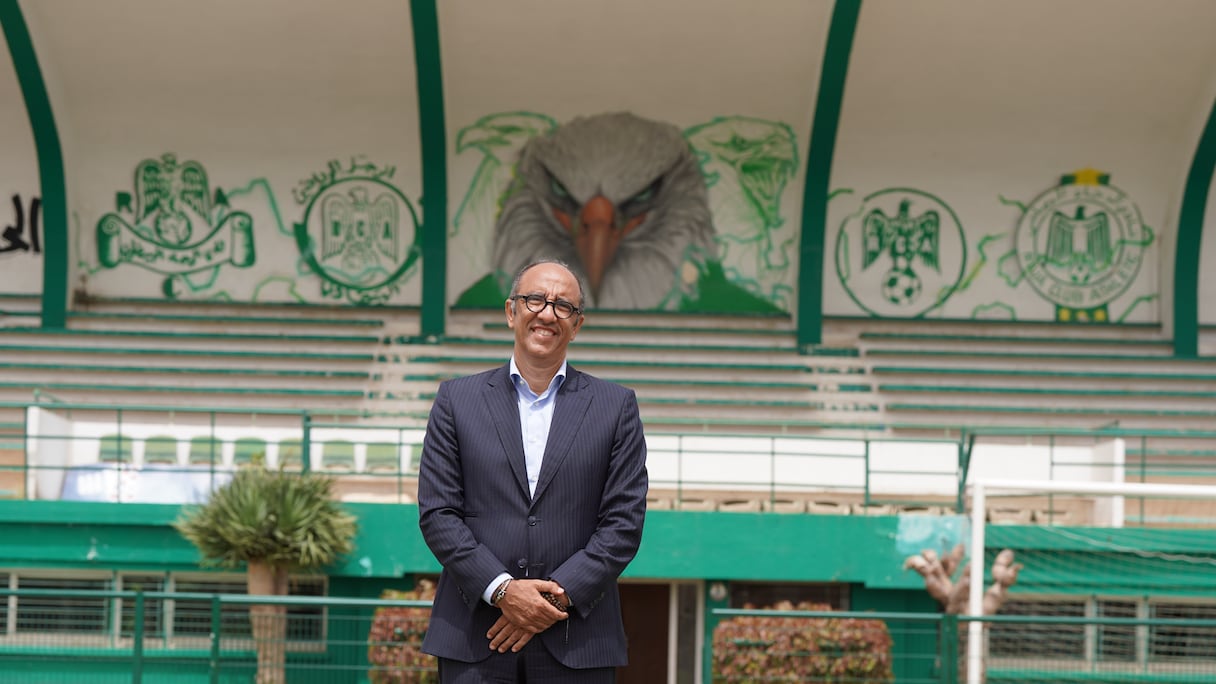
Raja Casablanca used its general assemblies to put figures on the changes made during the first year under its new management.
The club says it has settled 36 disputes worth more than MAD 31 million, lifted its transfer ban and strengthened its assets, laying the foundations for finally moving beyond its long-standing structural debt.
Two general assemblies were held on September 10. The first was a supplementary assembly covering the 2024-2025 season and was attended by 79 members. The second, covering the 2025-2026 financial year, brought together 104 members.
During the supplementary assembly, the moral and financial reports covering the period from May 1, 2024 to June 30, 2025 were presented, along with the accounts auditor’s report. The board, chaired by Jawad Ziyat, said it had reached a consensus formula with former presidents to present financial data from previous periods. According to the Casablanca club, the approach is intended to address internal matters “away from a logic of conflict.”
The first full year of the sporting company’s operations was the main focus of the meetings. Raja said the restructuring of its capital was completed following the signing of an investment agreement with Impact4Ports. The sporting company now has capital of MAD 250 million, with the association holding MAD 100 million, or 40%, while the institutional investor owns the remaining MAD 150 million, or 60%.
Another figure highlighted by the management was the settlement of 36 disputes worth more than MAD 31 million. The move allowed Raja to lift the transfer ban imposed on the club and regain room to strengthen its first-team squad.
The club also pointed to the association’s assets. It holds a stake valued at MAD 100 million in the sporting company, while the academy’s assets are estimated at around MAD 250 million. According to the management, these assets, combined with an activity generating a structural surplus, should allow the club to “finally turn the page on structural debt.”
The new model has also brought a clearer separation of responsibilities. The sporting company is now responsible for the men’s first team, the women’s team and futsal. The association retains a role in the sporting company’s governing bodies while continuing to manage the club’s academy and teams competing in the Casablanca League.
For the financial year running from July 1, 2025 to June 30, 2026, the management reported a “tangible improvement in financial indicators” and greater consistency in meeting its commitments. The moral and financial reports were then submitted to members, who questioned the board on various aspects of the club’s management.
A year after Raja’s effective transition to the sporting-company model, the management is presenting the change as more than a legal restructuring.
With the figures announced and a majority investor now in place, the real test will be whether the new model can maintain the club’s financial balance over the long term without diluting its identity.
