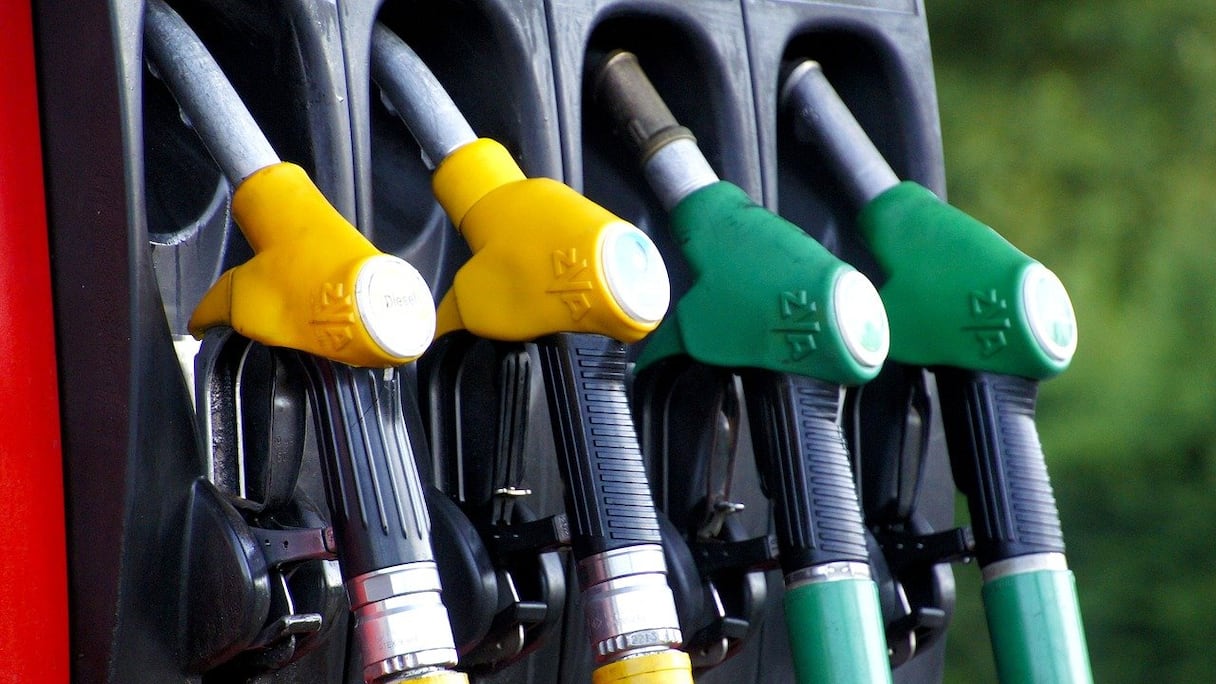
Diesel is once again approaching 15 dirhams a liter in Morocco. Since September 1, a liter has been priced at around 14.99 dirhams, following another 6 centime increase. For motorists, the bill rises automatically. A car that consumes 7 liters per 100 km therefore costs nearly 105 dirhams in fuel to travel 100 km, and around 735 dirhams for 1,000 km.
In this context, electric cars should have a clear advantage. A car that depends neither on diesel nor gasoline becomes all the more attractive as fuel prices rise. For the same mileage, the difference in cost can be considerable.
Adil Bennani, president of the Association of Vehicle Importers in Morocco (AIVAM), estimates that the savings can reach nearly two thirds. “In fact, today, for the same driving conditions and the same mileage, between a diesel vehicle and an electric vehicle, consumers can save two thirds of their budget, or even 70%.”
Read also : Over 80,000 Chinese electric bikes shipped to Morocco in six months
At 1,000 dirhams in monthly fuel costs, that would mean spending around 300 dirhams with a comparable electric vehicle. This estimate covers energy costs only and does not take into account the purchase price, insurance or maintenance.
With diesel close to 15 dirhams a liter, running costs have therefore become another argument in favor of electric vehicles. Yet the Moroccan market has not shifted to 100% electric vehicles.
According to AIVAM data through the end of July, electrified vehicles accounted for 17% of passenger car sales, up from 10.5% a year earlier. During the first seven months of the year, 22,963 electrified vehicles were registered, an increase of 86.3%.
Read also : Bank Al-Maghrib: Morocco must accelerate EV transition to maintain competitiveness
But fully electric vehicles remain marginal: 1,213 electric cars were registered, along with 1,402 range extended vehicles. Together, these two categories accounted for 1.9% of passenger car sales.
“It is undeniable that we are still disappointed by the performance of 100% electric vehicles. With a market share capped at 1%, growth remains very limited,” said Adil Bennani, president of AIVAM.
Morocco therefore remains far behind some foreign markets. “If I compare it with Europe, for example, electrified vehicles account for more than 45 to 50%,” he explained. He cited Norway in particular, where electric vehicles account for 90% of sales, compared with less than 12 to 13% in Italy and around 30% in the United Kingdom.
Read also : Fuel prices: Africa’s 10 most and least expensive countries
At the same time, the range of options is expanding, particularly with the arrival of Chinese brands. By the end of July, they accounted for 11.2% of passenger car sales, up from 5.1% a year earlier, according to AIVAM data.
For Bennani, price is no longer the main obstacle. “Today, the main issue is essentially charging,” he said.
“Yes, but where am I going to charge it?”
This has now become one of the main questions holding consumers back from buying an electric car. According to Adil Bennani, motorists are increasingly less concerned about the reliability of the technology or the price of vehicles. Their main concern is now range and, above all, the ability to charge their cars easily.
“From a technological standpoint, motorists now know that electric vehicles work, and the range of options has become very competitive. The real obstacle today is range anxiety. The question customers systematically ask is always the same: ‘Yes, but where am I going to charge my vehicle?’”
The issue is particularly relevant for motorists who live in apartments or park on the street. It becomes even more important when traveling between cities.
Read also : Fuel prices: A one-dirham hike raises fresh questions over competition in Morocco’s fuel market
“In the city, you can more or less organize things because you can charge at home, even though not everyone has that option. But when you travel, it becomes much more complicated,” he explained.
This difficulty also limits the number of customers likely to switch to fully electric vehicles. So far, the market has mainly attracted households with detached homes that can use their electric car as a second or third vehicle. To expand this customer base, people need to be able to charge easily at home, in cities and along major roads.
A network that is still too limited
This is where the problem lies. According to Bennani, Morocco currently has around 150 public fast charging stations, compared with more than 1,500 that would be needed to truly accelerate electrification.
“If we take fast charging, from 50 kW onward, as our benchmark, there are around 150 public chargers today. That is very low. If we really want to break the current trend and accelerate electrification, we would need to exceed 1,500 fast charging points.”
The challenge, however, is not simply to increase the number of charging stations. Their power capacity must also increase to reduce waiting times.
Read also : Fuel prices: Africa’s 10 most and least expensive countries
“We should not simply multiply the number of 50 kW chargers. We now need to move toward capacities of 120 to 150 kW and beyond,” said the AIVAM president.
But installing more high powered chargers also raises questions about the capacity of the electricity grid. A station equipped with several fast chargers may require a significant amount of electricity at the same time.
Solutions already exist to address this constraint, particularly through solar power and battery storage. “We can combine very powerful chargers with solar panels and storage batteries. The panels produce the energy, the batteries store it and can then provide the power needed when vehicles are charging,” he said.
This type of system could in particular make it possible to install fast chargers in areas where the electricity grid could not easily absorb additional demand. “With this type of solution, we can install very powerful chargers even in remote locations and limit their dependence on the public grid. The technical solutions already exist,” Adil Bennani explained.
Read also : Swiss firm plans 100,000-tonne synthetic fuel plant in Tan-Tan
Technology can also significantly reduce waiting times. Some fast charging systems can provide several hundred kilometers of range in just a few minutes.
“The technology already exists. We are even the first Arab and African country to have integrated this type of charger,” he added.
A framework in need of revision
But for this network to really develop, private operators must first be able to invest under favorable conditions. For Bennani, the current framework needs to evolve, particularly to allow them to sell charging services directly.
“To develop the charging network, several conditions need to be met, particularly regulatory and economic ones. The first is to allow private operators to install chargers along the highway network and give them the ability to bill customers directly for the electricity consumed.”
Gas stations could also play an important role in this rollout, particularly along major roads.
“We need to open the highway network to private operators that want to invest in charging. Gas stations could also play an important role. We could require operators to have at least one charger at each station and two chargers at highway stations.”
Read also : Fuel prices rise in Morocco as diesel and gasoline increases take effect
For Adil Bennani, Morocco already has several advantages that could help accelerate this rollout: a well developed highway network, relatively short distances between major cities and technical solutions that are already available.
“We have a much more compact territory, an already well structured highway network and relatively short distances between cities. We often talk about journeys of 300, 400 or 500 kilometers. So it is much easier to cover them progressively.”
The remaining challenge is to create the conditions for private investment to follow. For the AIVAM president, the rollout could move quickly if the regulatory framework is adapted.
“There is a need for political will, but the state does not need to directly finance the entire network. Above all, we need to create the conditions that allow operators to invest. With an appropriate framework, the problem can be completely resolved within 18 months,” Adil Bennani concluded.
