Morocco’s growing economy continued to drive higher energy demand in 2025. According to the 75th edition of the Statistical Review of World Energy, published by the Energy Institute in partnership with Ember, KPMG, and Kearney, the country’s total energy supply reached 0.99 exajoules in 2025, up 5.2% from the previous year.
The report says this marked the strongest increase among the major African economies included in the study. Over the past decade, Morocco’s total energy supply has grown by nearly 29%, reflecting industrial expansion, infrastructure development, rising mobility needs, and the continued electrification of the economy.
The trend is also reflected at the individual level, with energy supply per capita reaching 25.82 gigajoules in 2025, its highest level in the past ten years.
The increase in energy consumption comes as Morocco continues to transform its energy model.
Read also : HCP forecasts Morocco’s economic growth at 5.4% in third quarter of 2026
According to the report, oil, coal, and natural gas still account for about 96% of the country’s total energy supply, a structure comparable to that of many emerging economies that remain heavily dependent on imported hydrocarbons.
The report notes, however, that investments made over the past several years have enabled renewable energy to steadily increase its contribution to Morocco’s energy system. The transition now aims to gradually reduce external dependence while strengthening the country’s energy resilience.
Electricity production continues to rise
Economic growth has also been accompanied by a steady increase in electricity generation.
According to the report, Morocco produced 45.9 terawatt-hours of electricity in 2025, an annual increase of 5.3% and more than 50% higher than in 2015.
The increase reflects growing demand from households, services, and particularly the country’s productive sectors. Industrialization, infrastructure investment, and the expansion of new industries continue to support electricity demand.
The report adds that Morocco recorded the fastest growth in electricity generation among the major African economies analyzed.
One of the report’s main findings is the consolidation of Morocco’s position on the continent.
According to the study, Morocco remains Africa’s third-largest renewable energy producer, behind South Africa and Egypt.
Read also : Nador looks to attract investors as West Med port prepares for launch
Renewable electricity generation reached 11.5 TWh in 2025. Solar power continued its expansion with annual growth of 18.3%, while wind remained the country’s largest renewable source, generating 9.2 TWh.
This performance allows Morocco to retain third place in Africa in both solar and wind energy, reflecting the results of investments made over more than a decade.
The report also notes that renewable energy accounted for 25.1% of Morocco’s electricity generation in 2025, the highest share among the major African economies included in the comparison.
Installed capacity continues to expand
The growth of renewable infrastructure has been one of the key drivers of this performance.
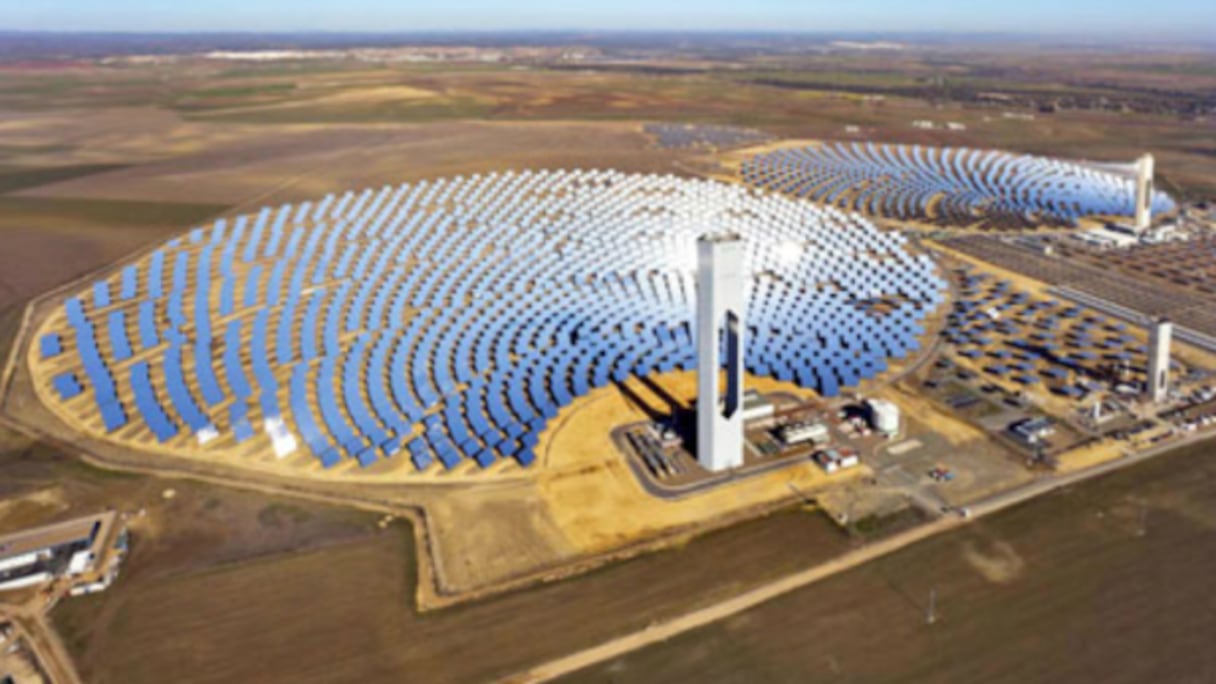
Using data from the International Renewable Energy Agency (IRENA), the report states that Morocco’s installed solar capacity exceeded 1,086 MW in 2025, compared with just 200 MW in 2015, meaning the country’s solar fleet has expanded more than fivefold over the past decade.
Installed wind capacity also continued to grow, reaching 2,452 MW and allowing Morocco to maintain its third-place ranking in Africa.
With a combined solar and wind capacity of 3,538 MW, Morocco now has one of the continent’s largest renewable electricity generation systems.
The report nevertheless notes that installed capacity will need to continue expanding at a faster pace to keep up with energy demand, which is rising more rapidly than renewable generation.
It also stresses that strengthening energy security has become an economic priority.
Read also : Three regions account for 58% of Morocco’s GDP as regional economic disparities widen
Oil consumption reached 330,000 barrels per day in 2025, its highest level since the statistical series began. At the same time, the report notes that Morocco has had no domestic refining capacity for several years.
According to the study, this underscores the importance of the country’s efforts to diversify energy sources, develop infrastructure, and secure supplies in order to reduce its exposure to fluctuations in international energy markets.
It also places investment in renewable energy, electricity grids, energy storage, and future green hydrogen projects at the center of Morocco’s economic competitiveness.
A new phase in the energy transition
The report also highlights what it describes as a paradox common to fast-growing economies. While Morocco continues to strengthen its position among Africa’s renewable energy leaders, rapidly rising energy demand means fossil fuels still account for a significant share of consumption.
As a result, energy-related CO₂ emissions increased by 5.2% in 2025, matching the growth rate of total energy supply. According to the report’s authors, this indicates that the decoupling of economic growth from carbon emissions remains a work in progress.
Read also : Morocco lays the groundwork for a decarbonized economy with green finance framework
The report says this does not diminish the progress already achieved. Rather, it shows that Morocco’s energy transition is entering a more demanding phase, in which the challenge will be not only to expand renewable capacity but also to accelerate its integration across the broader economy.
The Statistical Review of World Energy concludes that Morocco has established a solid foundation for continuing its energy transition. It notes that the country remains Africa’s third-largest renewable energy producer, has the highest share of renewables in electricity generation among the African economies included in the report, and is one of the continent’s most dynamic energy markets.