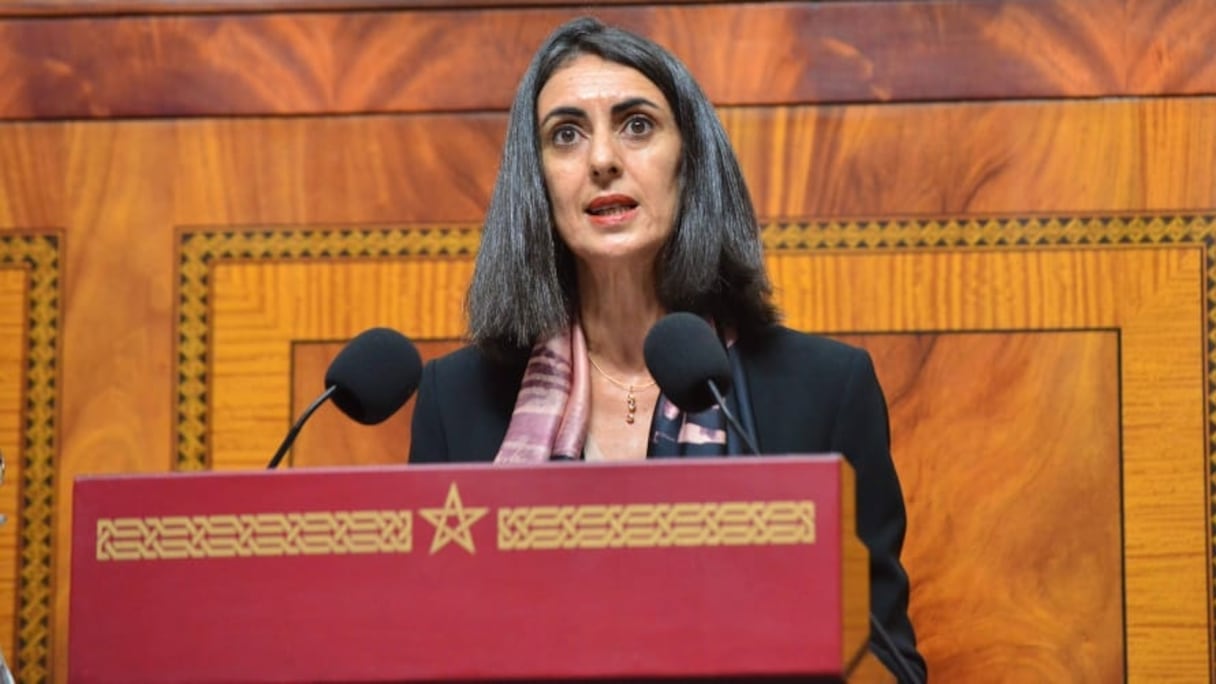
Opening her presentation, Fettah described a global environment marked by slower economic growth, driven by geopolitical tensions and rapid technological change.
She also pointed to continued volatility in energy prices. “The ceasefire reached in June 2026 brought Brent crude back to around $70 a barrel. However, the resumption of military operations on July 13 pushed prices higher again, confirming how fragile that period of calm was,” she said.
Turning to the domestic economy, the minister highlighted what she described as a “structural transformation of growth,” driven by the gradual recovery of agriculture and the resilience of non-agricultural sectors.
After expanding by nearly 5% in 2025 despite external shocks and successive years of drought, Morocco’s economy has maintained its momentum. In the first quarter of 2026, agricultural value added surged by 18.4%, compared with 8.1% a year earlier. At the same time, non-agricultural activity slowed to 3%, temporarily affected by heavy rainfall that disrupted several sectors, including construction, fishing and maritime transport.
Read also : Cash in circulation hits record MAD 491 Billion in Morocco, central bank Says
2026 Growth Forecast Revised Upward
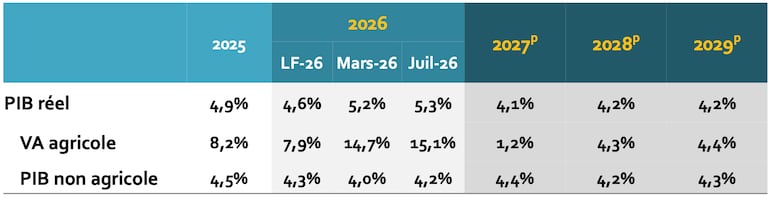
The minister said Morocco’s economic outlook had improved significantly. Growth is now expected to reach 5.3% in 2026, 0.7 percentage points higher than the forecast included in the Finance Law.
The revised projection is based on a strong agricultural rebound of 15.1% and continued resilience in non-agricultural activity, expected to grow by 4.2%. Investment and domestic demand are also expected to remain key drivers of growth.
Inflation, meanwhile, is projected to remain under control at around 1.5% in 2026 and 2% in 2027, despite imported price pressures.
On employment, Fettah pointed to what she described as encouraging progress. Morocco created 193,000 net jobs in 2025, the strongest performance since 2006, excluding the post-COVID rebound recorded in 2021.
Although unemployment remains high at 13%, she said current indicators point to a gradual improvement in the labor market. She nevertheless acknowledged that structural challenges persist, particularly for young people, women, university graduates and rural communities.
The minister also welcomed the reduction of the budget deficit to 3.5% of GDP in 2025, a marked improvement compared with 2020.
She attributed the progress to stronger tax and non-tax revenues, supported by tax reform without increasing the tax burden. These resources helped finance major infrastructure projects, social commitments, the expansion of social protection and preparations for major international sporting events.
Fettah also noted that Morocco’s tax reform is now presented by the International Monetary Fund (IMF) as a regional model, based on broadening the tax base, rationalizing tax expenditures and modernizing tax administration.
The report on tax expenditures recommends continuing the reform of value-added tax (VAT) by simplifying its structure and reducing exemptions while strengthening social protection mechanisms.
Looking ahead, the government has identified three priorities: assessing the effectiveness of tax expenditures, accelerating the digitalization of tax administration, and expanding land and environmental taxation.
Budget Deficit Expected at 3% in 2026
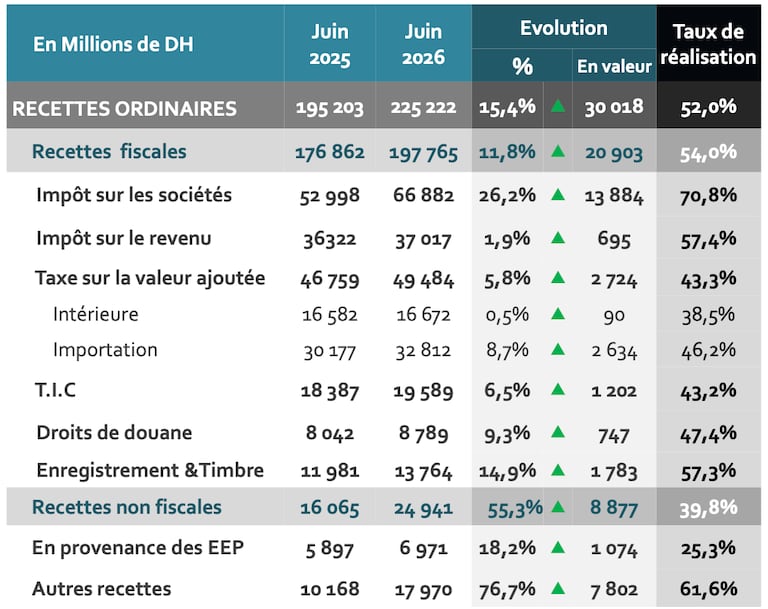
Budget indicators at the end of June 2026 show an improvement compared with the same period last year. According to the minister, stronger revenue collection should allow Morocco to keep the budget deficit at 3% of GDP by year-end, in line with government targets.
Public debt also continued to decline. The debt-to-GDP ratio fell to 66.6% in 2025, down 5.6 percentage points from 2020.
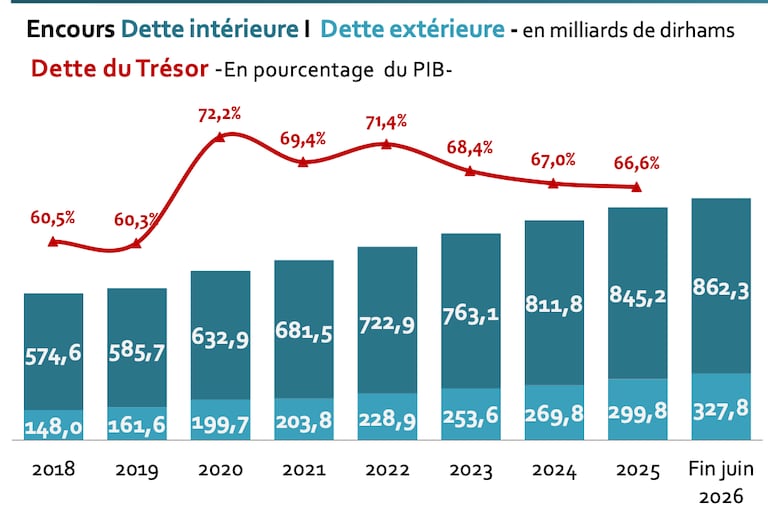
The IMF considers Morocco’s debt sustainable, particularly because of its long maturity profile and limited exposure to foreign-exchange risk.
Looking ahead, the government expects economic growth of 4.1% in 2027, before stabilizing at around 4.2% in 2028 and 2029.
The budget framework also projects the budget deficit remaining at 3% of GDP, allowing the debt ratio to gradually decline to around 63% of GDP by 2029.
“This direction will strengthen debt sustainability and restore fiscal policy space,” Fettah concluded.